Yes, hardwood flooring is worth installing in Tampa when you choose the right product and hire an experienced local installer. Engineered hardwood generally outperforms solid hardwood in Florida's humidity because its cross-layered core resists expansion and contraction better than a single plank of solid wood. Installed cost in Tampa typically runs $8–$22 per square foot depending on species and installation method, and a well-maintained hardwood floor lasts 25–100+ years, with engineered hardwood built to last 20–40 years before the wear layer is exhausted.
Hardwood flooring has stayed the gold standard of home flooring for a simple reason: nothing else brings the same warmth, character, and long-term value to a room. In Tampa Bay, though, that reputation runs into a very real question. Florida's high humidity, sudden afternoon storms, and intense summer air-conditioning cycles put more structural stress on wood plies than almost any other U.S. climate. That's why so many homeowners look specifically for premium hardwood flooring installation Tampa contractors can deliver safely, and immediately follow up with the same core worry: will this floor actually hold up here over the years? For the complete overview, see our Flooring Installation Tampa: Complete Guide.
The honest answer is that hardwood absolutely can thrive in a Florida home, but only when the structural product choice, subfloor preparation, and anchoring methods perfectly match our local climate. Modern engineered hardwood has changed the equation entirely. Instead of a solid wood plank that swells and contracts aggressively with every atmospheric shift, engineered wood uses cross-layered plies topped with a real hardwood veneer. This structural configuration provides the high dimensional stability that solid wood lacks. That single change is why engineered options now account for the majority of successful floor overhauls across Tampa, St. Petersburg, and Clearwater.
Whether you are integrating high-end plies to complete a seamless layout during expansive home renovations, updating high-visibility surfaces in upscale kitchen remodels, or pairing luxury planks with custom cabinetry, choosing a team that understands local moisture mitigation is crucial. Proper installation transforms an ordinary space into an architectural standout while protecting your financial investment.
This guide breaks down everything a Tampa homeowner needs before committing: solid versus engineered construction, the best wood species for our climate, real 2026 installation costs by room, how hardwood stacks up against modern alternative flooring & finishes, the installation process step by step, and the maintenance habits that protect your investment for decades. By the end, you'll know whether hardwood is the right call for your property, and exactly what to ask any licensed team before signing a contract.
Every price range, material grade, and project timeline below reflects what our design-build crew at Renov8 Plus handles on real, local jobs daily.
Solid Hardwood vs. Engineered Hardwood: Which Wins in Florida?
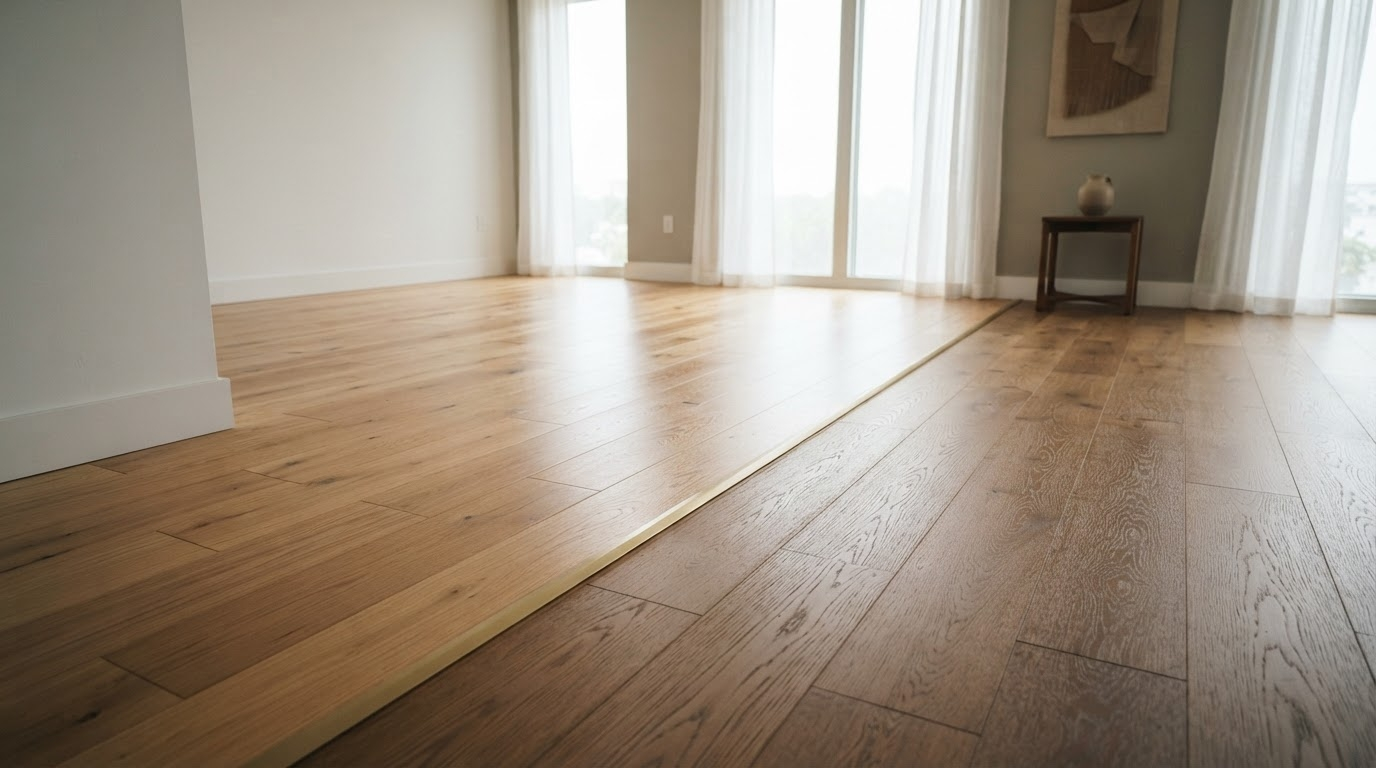
The single most important decision in a Tampa hardwood project isn't the wood species; it's whether you install solid or engineered hardwood. Solid hardwood is one piece of wood, milled top to bottom, that expands and contracts as a single unit whenever indoor humidity shifts. Engineered hardwood is built from multiple layers of plywood or high-density fiberboard, cross-laminated at 90-degree angles, with a real hardwood veneer (usually 2–6mm) on top. That layered core is what resists Florida's humidity swings so much better.
| Factor | Solid Hardwood | Engineered Hardwood |
|---|---|---|
| Construction | One solid piece of milled hardwood, ¾" thick | Plywood/HDF core, cross-layered, with a real wood veneer on top |
| Moisture resistance | Lower, swells and gaps with humidity swings | Higher, cross-layered core resists expansion |
| Best for Tampa slab homes | Not recommended (moisture from slab) | Yes, engineered can be glued or floated over concrete |
| Refinishing potential | 4–6 sandings over its lifetime | 1–3 sandings, depending on veneer thickness |
| Lifespan | 50–100+ years with care | 20–40 years, longer with a thick wear layer |
| Installed cost | $10–$22 per sq ft | $8–$18 per sq ft |
| Installation method | Nail-down over wood subfloor only | Nail-down, glue-down, or floating, works over concrete |
| Best applications | Second-story wood-subfloor homes, historic homes | Slab-on-grade homes, first floors, humid or coastal areas |
For most Tampa Bay homes, the majority of which are built on a concrete slab, engineered hardwood is the clear recommendation. It can be installed directly over concrete with a proper moisture barrier, handles seasonal humidity swings without gapping or cupping, and still delivers the authentic look and feel of real hardwood because the top layer is solid wood. Solid hardwood still has a place in older Tampa homes with a raised wood subfloor, particularly historic Hyde Park and Seminole Heights bungalows, but it is a poor fit for a slab-on-grade first floor in our climate.
Best Wood Species for Florida Homes
Species selection affects durability, moisture performance, and price just as much as construction type. Here's how the most popular options perform in Tampa Bay homes.
For most Tampa homeowners, engineered white oak is the safest, most versatile choice; it's widely available, takes stain well, resists humidity better than almost any domestic species, and fits both traditional and modern interiors. Hickory is the better pick for busy households with kids or large dogs, while walnut and exotic species work best as accent rooms rather than whole-home flooring, given their higher price point and softer moisture tolerance in solid form.
Hardwood Flooring Installation Costs in Tampa
Tampa hardwood pricing depends on species, plank width, installation method, and how much prep work your subfloor needs. The breakdown below splits total installed cost per square foot into four tiers, based on current 2026 Tampa Bay material and labor rates.
Cost by Room
Whole-home pricing is helpful for budgeting, but most homeowners plan room by room. Here's what Tampa homeowners typically spend, including installed material and labor at a mid-range grade.
These figures assume a standard slab or plywood subfloor in reasonably level condition. Homes with moisture issues, uneven concrete, or extensive removal of old tile or carpet padding should budget toward the higher end of each range and always get a written, itemized quote before committing, so you know exactly what's included and what could add to the total.
Hardwood vs. Other Flooring Options
Hardwood isn't the only premium flooring option for Tampa homes. Luxury vinyl plank, tile, and laminate all compete for the same budget, and each has a legitimate case in the right room. Here's how they stack up side by side.
The right answer depends on the room and the goal. If maximum resale value and authentic warmth matter most, engineered hardwood in the main living areas is the strongest choice. If a family needs a fully waterproof, low-maintenance surface for a rental or a busy household with kids and pets, LVP is hard to beat on value. Tile remains the go-to for kitchens, bathrooms, and any space directly exposed to Florida's outdoor humidity, like a lanai transition. Laminate is a reasonable budget option for secondary bedrooms or closets, but it doesn't hold up as well long-term in a humid climate and won't add the resale premium that real hardwood does.
The Hardwood Installation Process
A properly installed hardwood floor is a sequence, not a single day of work. Skipping any of these phases is the single biggest reason hardwood floors fail in Florida, and it's exactly what separates an experienced local installer from a rushed job.
For a typical 1,500–2,000 sq ft Tampa home, expect 1–2 weeks from acclimation through final walkthrough. Larger whole-home projects, or homes needing extensive subfloor leveling, can run 3–4 weeks.
Florida Climate Considerations for Hardwood Flooring
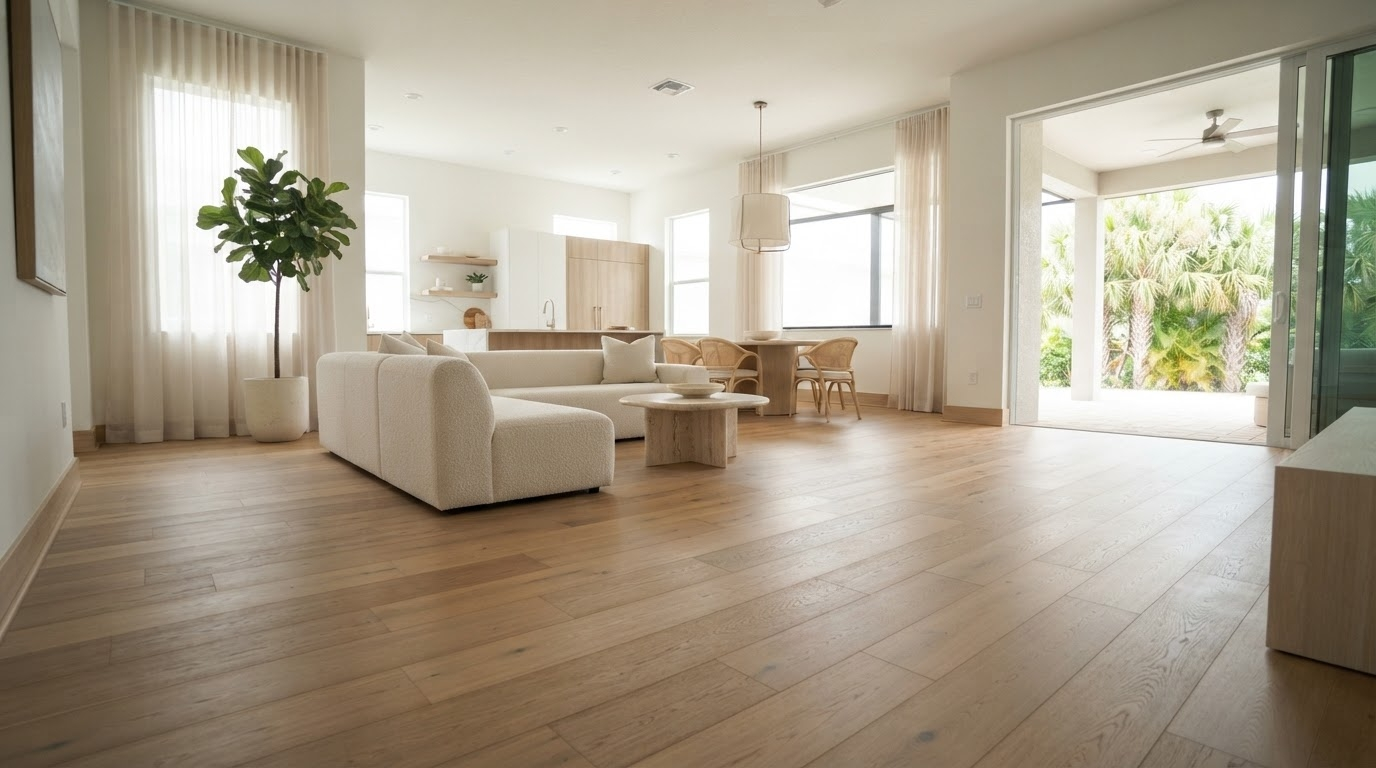
Tampa Bay's climate is genuinely tougher on hardwood than almost anywhere else in the country, and every stage of a good installation should account for it.
- Humidity — Florida's average relative humidity sits well above the 30–50% range wood prefers, which is why acclimation and a proper moisture barrier are non-negotiable steps, not optional upsells.
- Expansion and contraction — Wood swells in summer humidity and contracts in the drier winter months; installers must leave proper expansion gaps at every wall and transition.
- Air conditioning and indoor humidity control — Running the AC consistently, rather than only on hot days, keeps indoor humidity in the ideal 30–50% range year-round and is the single best thing a homeowner can do to protect a hardwood investment.
- Coastal moisture — Homes near Clearwater, St. Petersburg, and Davis Islands face higher ambient humidity and should lean toward engineered hardwood with a robust moisture barrier.
- UV exposure — Florida sun fades and can dry out wood finishes near large windows or sliding doors; UV-protective window film or window treatments extend finish life.
- Hurricane season — Power outages during storm season mean no AC for stretches of time; a whole-home dehumidifier or generator plan protects flooring during extended outages.
- Mold prevention — A correctly installed vapor barrier, paired with prompt cleanup of any water intrusion, is the best defense against subfloor mold in a humid climate.
Hardwood Floor Maintenance in a Florida Home
Good maintenance habits matter more in Tampa than almost anywhere else, simply because humidity keeps working against your floor year-round. A few consistent habits go a long way.
- Daily cleaning — Sweep or dry-mop to remove grit that scratches the finish underfoot.
- Mopping guidelines — Use only a barely-damp microfiber mop and a wood-safe cleaner, never a wet mop or steam cleaner.
- Scratch prevention — Felt pads under furniture legs, and a no-shoes policy in high-traffic areas.
- Furniture protection — Use furniture coasters and avoid dragging heavy pieces across the floor.
- Pet-friendly tips — Keep nails trimmed and clean up pet accidents immediately to prevent moisture staining.
- Humidity monitoring — A simple indoor hygrometer helps you catch humidity swings before they cause gapping or cupping.
- Refinishing schedule — Solid hardwood typically needs refinishing every 7–10 years; engineered hardwood with a thick veneer can go 10–15 years between refinishes.
2026 Hardwood Design Trends in Tampa Homes
Tampa's hardwood installs in 2026 lean toward a lighter, more relaxed coastal aesthetic that suits Florida's natural light.
Common Hardwood Installation Mistakes to Avoid
Most hardwood failures in Florida trace back to one of these avoidable mistakes.
- Skipping acclimation — Installing flooring straight out of the box before it adjusts to indoor humidity.
- Ignoring moisture testing — Installing over a slab without checking moisture content first.
- Improper expansion gaps — Leaving no room for the wood to move seasonally, causing buckling.
- Poor subfloor preparation — Installing over an uneven or unclean subfloor, leading to squeaks and gaps.
- DIY installation without proper tools — Skipping moisture testing tools or acclimation planning is a common and costly Tampa mistake.
- Choosing solid hardwood in wet-prone areas — Laundry rooms and kitchens with heavy water use are poor fits for solid wood.
- Hiring inexperienced installers — Choose a crew that has specifically worked with Florida's slab-on-grade construction before.
How to Choose a Hardwood Flooring Contractor in Tampa
The product matters, but the installer matters just as much; a great engineered white oak floor can still fail if it's installed without proper moisture testing or acclimation. Use this checklist before hiring anyone.
- Licensing — Confirm an active Florida contractor license and ask to see it. Remodels by Renov8 Plus is fully licensed under CGC #1537706.
- Insurance — Verify general liability and workers' compensation coverage before any crew steps into your home.
- Experience — Ask specifically about experience with Florida slab-on-grade installations, not just wood-subfloor projects up north.
- Manufacturer certifications — Certified installers are trained on proper acclimation and moisture protocols for the specific product line.
- Warranty — Get the installation warranty in writing, separate from the manufacturer's product warranty.
- Portfolio — Ask to see completed hardwood projects in Tampa Bay homes similar to yours.
- References — Call at least one recent hardwood client and ask specifically how the floor has held up through a full humid season.
- Moisture testing procedures — A qualified installer should explain exactly how and when they test subfloor moisture; if they can't, that's a red flag.
ROI & Home Value: Does Hardwood Pay Off?
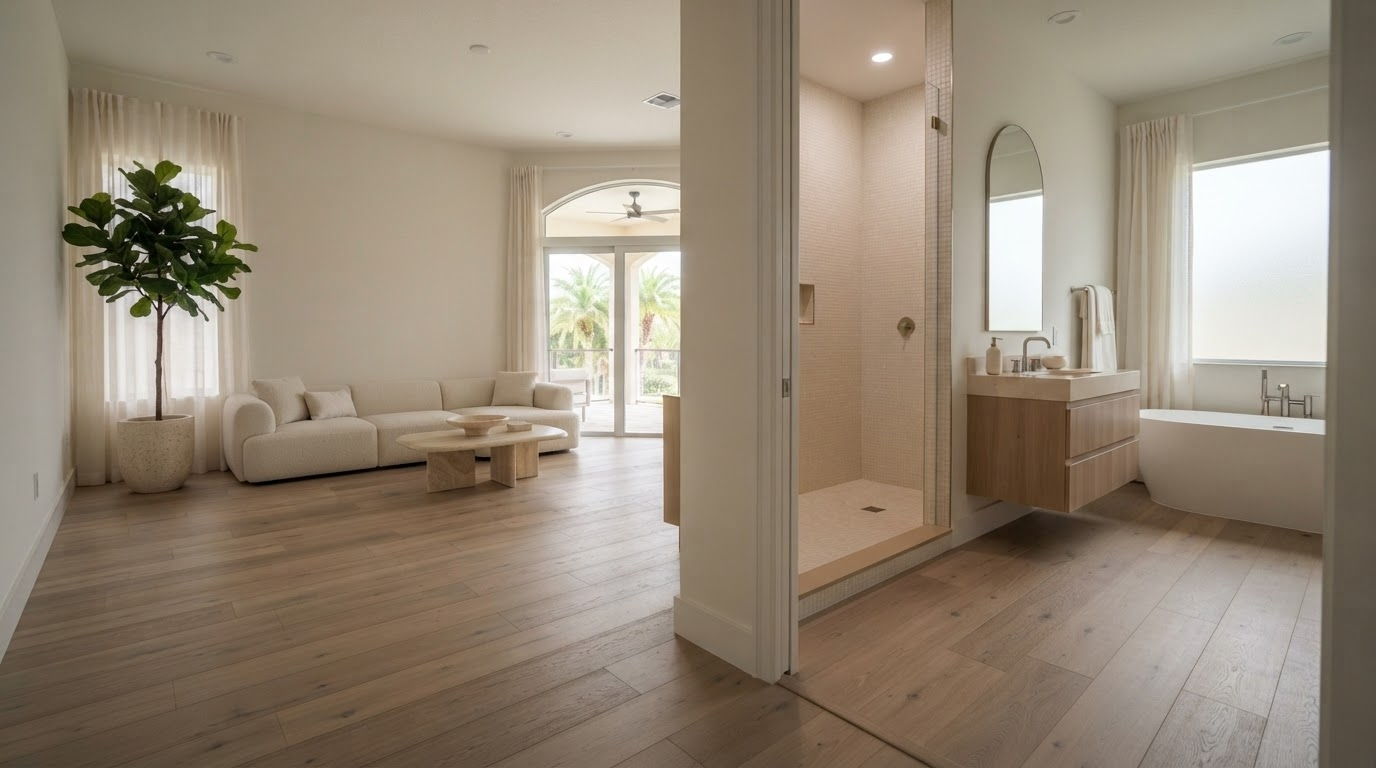
Hardwood consistently ranks among the flooring upgrades buyers notice first, and in a competitive Tampa Bay resale market, that matters.
- Buyer appeal — Real hardwood photographs well and reads as a premium, move-in-ready feature in listings.
- Luxury perception — Hardwood signals a higher overall build quality even in a modestly priced home.
- Long-term investment — Unlike carpet or laminate, hardwood can be refinished rather than replaced, extending its useful life for decades.
- Resale value — Appraisers and buyers alike consistently favor hardwood over carpet in main living areas.
- Highest return — Hardwood delivers the strongest ROI when installed in the primary living areas, kitchen-adjacent spaces, and bedrooms that buyers see first during a showing.
Conclusion: Is Hardwood Flooring Worth It in Tampa?
Hardwood flooring is absolutely worth considering for a Tampa home as long as the product and installation account for Florida's climate. Engineered hardwood, a properly installed moisture barrier, correct acclimation, and consistent indoor humidity control are what separate a floor that lasts decades from one that gaps and buckles within a year. For homeowners across Tampa, South Tampa, Carrollwood, Westchase, New Tampa, Brandon, Riverview, Wesley Chapel, Lutz, Odessa, Clearwater, and St. Petersburg, the right hardwood installation adds real, lasting value both in daily enjoyment and at resale.
The best next step is a free, in-home consultation where a licensed installer can test your subfloor, walk you through species and finish options, and give you an itemized quote based on your actual home, not a generic online estimate.
Schedule your free hardwood flooring consultation with Remodels by Renov8 Plus. We'll test your subfloor, walk you through species and finish samples, and give you a clear, honest quote, no pressure, no guesswork.
GET YOUR FREE ESTIMATE
(656) 232-0999 | info@renov8plus.com | renov8plus.com