For most Tampa condos, luxury vinyl plank (LVP) or engineered hardwood over a rated acoustic underlayment is the best combination of HOA compliance, waterproof performance, and sound control. Porcelain tile is also a strong choice where your HOA permits it, especially in kitchens and bathrooms. Nearly every Tampa Bay condo association requires an acoustic underlayment with a minimum IIC (Impact Insulation Class) rating before approving hard-surface flooring. Installed cost typically runs $9–$24 per square foot including underlayment, and most single-condo projects take 3–10 days once HOA approval is in hand.
Replacing flooring in a Tampa condo is a genuinely different project than a single-family home remodel, and homeowners who treat it the same way almost always run into trouble. In a detached house, you can choose whatever flooring you like and start demolition the same week. In a condominium unit, your association almost certainly has a strict say in what materials go down, how they are structurally bonded, and even the exact operational hours a crew can work. Skipping that formal approval step is the single most common reason high-rise flooring projects stall out or get flagged by management after the fact.
HOA approval matters because condos share physical structure. A hardwood, laminate, or tile floor installed without the proper technical underlayment doesn't just affect your personal unit; it transmits footsteps, dropped objects, and furniture noise straight into the ceiling of the unit below. That's exactly why condo flooring installation Tampa searches so often lead homeowners straight to technical questions about IIC ratings and acoustic membranes before they've even picked a design style. If you are planning an upgrade as part of comprehensive full home renovations, scaling up your space with targeted kitchen remodels, or revamping wet areas with premium bathroom remodels, ensuring compliance with association bylaws is just as critical as the final finish.
Waterproof, sound-reducing flooring carries extra value in a Tampa condo specifically because of our coastal climate and building stock. Coastal humidity, frequent A/C cycling, and the reality of Florida's storm season all put physical pressure on material stability, while multi-level concrete and wood-frame construction makes sound transmission between floors a daily quality-of-life issue. This guide walks through HOA approval pathways, the best high-performance flooring & finishes for regional condos, real 2026 installed costs, soundproofing test metrics, and exactly how to avoid the compliance mistakes that get projects rejected or redone.
Every strategy, cost tier, and acoustic standard detailed below reflects what our design-build teams at Renov8 Plus handle on real local jobs navigating city permits and condo boards from Bayshore Boulevard to Channelside.
Understanding HOA Flooring Rules in Tampa Condos
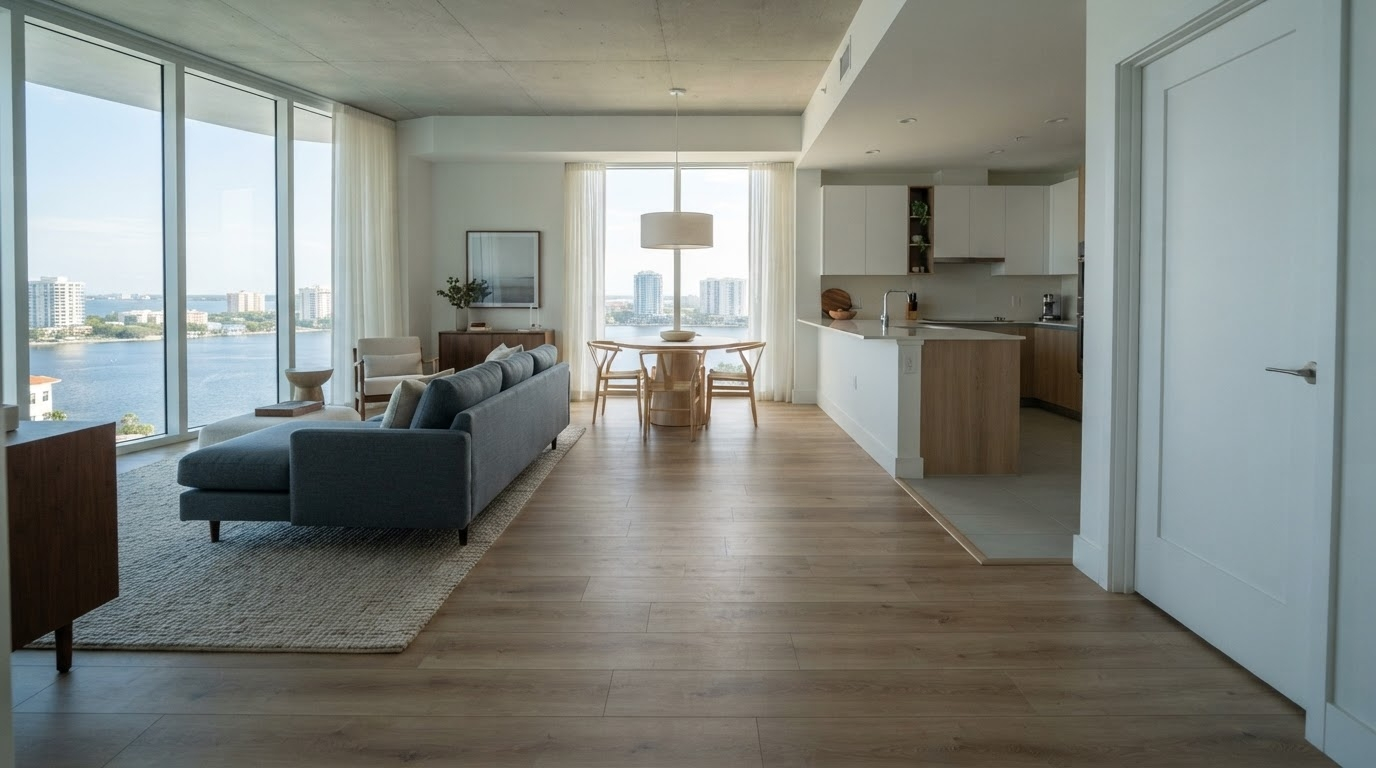
Nearly every Tampa Bay condo association has a formal flooring policy, and it almost always needs to be satisfied before, not after, you order materials. Here's what's typically involved.
- HOA approval process — Most associations require a written application describing the flooring type, underlayment, and installer before any work begins.
- Flooring application requirements — Expect to submit product spec sheets, underlayment IIC/STC ratings, proof of contractor licensing and insurance, and sometimes a certificate of insurance naming the association.
- Sound transmission standards (IIC/STC) — Associations commonly require a minimum Impact Insulation Class (IIC) rating of 50–60+ for any hard-surface flooring installed above another unit.
- Underlayment requirements — Most policies specify a minimum underlayment thickness and material type, often cork, rubber, or a rated acoustic membrane.
- Working hour restrictions — Many buildings limit construction noise to weekday daytime hours, which affects how many days a project realistically takes.
- Elevator reservations — High-rise buildings typically require a scheduled service elevator reservation and protective padding for material deliveries and debris removal.
- Insurance requirements — Associations generally require proof of general liability insurance, and sometimes builder's risk coverage, before approving access.
- Contractor licensing — Many HOAs will only approve licensed, insured contractors, a good reason to confirm this before you fall in love with a flooring sample.
HOA Flooring Approval Checklist
Review these before purchasing a single square foot of flooring:
- Request your association's written flooring policy or rules and regulations document.
- Confirm the minimum required IIC and/or STC rating for hard-surface flooring.
- Confirm any approved underlayment brands or types listed in the policy.
- Submit your flooring and underlayment spec sheets for written approval before ordering.
- Confirm your contractor's license and insurance meet the association's requirements.
- Reserve the service elevator and confirm any required protective padding.
- Confirm allowed working hours and any noise restrictions during construction.
- Ask whether a security deposit or damage deposit is required before work begins.
Best Flooring Options for Tampa Condos
Six materials cover the vast majority of condo flooring installs in Tampa Bay. Here's how they compare on the factors that matter most for condo living.
| Material | Moisture Resistance | Noise Performance | Lifespan | Maintenance | HOA Compatibility | Best Rooms |
|---|---|---|---|---|---|---|
| Luxury Vinyl Plank | Excellent | Excellent with pad | 15–25 yrs | Low | Excellent, widely approved | Whole condo |
| Engineered Hardwood | Good | Good with underlayment | 20–40 yrs | Moderate | Good, often approved | Living areas, bedrooms |
| Porcelain Tile | Excellent | Fair, needs underlayment | 50+ yrs | Low | Varies by association | Kitchens, baths, entries |
| Ceramic Tile | Good | Fair, needs underlayment | 30–50 yrs | Low | Varies by association | Kitchens, baths |
| Laminate | Fair | Good with pad | 10–20 yrs | Low | Good, commonly approved | Bedrooms, secondary rooms |
| Waterproof Hybrid | Excellent | Excellent with pad | 20–30 yrs | Low | Excellent, widely approved | Whole condo, wet areas |
Luxury Vinyl Plank (LVP)
LVP is the most popular condo flooring choice in Tampa Bay right now, and for good reason: it's fully waterproof, pairs easily with a rated acoustic pad to hit most HOA sound requirements, and holds up well to pets and everyday traffic. The main trade-off is that it doesn't carry quite the resale prestige of real hardwood or natural stone, though today's best LVP products are visually convincing.
Engineered Hardwood
Engineered hardwood brings authentic warmth and the strongest resale appeal of any condo flooring option, and its layered core handles Tampa's humidity far better than solid wood. It costs more than LVP and needs a compatible acoustic underlayment to satisfy most HOA sound requirements, but it remains a favorite for owner-occupied units in buildings that allow it.
Porcelain Tile
Porcelain is fully waterproof and virtually maintenance-free, making it a natural fit for condo kitchens and bathrooms. Its main limitation in a condo setting is sound transmission; tile is a harder, denser surface that requires a genuinely effective underlayment system to meet most associations' IIC requirements for full-room installs.
Ceramic Tile
Ceramic offers many of the same moisture and durability benefits as porcelain at a lower price point, though it's somewhat less dense and durable over the long run. It works well in condo kitchens and bathrooms, with the same underlayment considerations as porcelain for sound control.
Laminate Flooring
Laminate is a budget-friendly option that most HOAs approve without issue, especially paired with a foam or rubber acoustic pad. It doesn't hold up as well long-term in Florida's humidity as LVP or engineered hardwood, making it a better fit for secondary bedrooms than primary living spaces.
Waterproof Hybrid Flooring
Hybrid flooring (rigid-core vinyl with an integrated or attached pad) combines LVP's waterproof performance with built-in sound dampening, often meeting HOA IIC requirements without an additional separate underlayment. It's an increasingly popular choice for whole-condo installs where simplicity and waterproofing both matter.
Condo Flooring Installation Costs in Tampa
Condo flooring costs more per square foot than the same material installed in a single-family home, mainly because of HOA-related logistics: elevator scheduling, common-area protection, and mandatory acoustic underlayment all add to the bill. The breakdown below splits total installed cost per square foot into four tiers.
Beyond material and labor, the biggest cost swing in a condo project usually comes from HOA-related logistics; buildings with strict elevator scheduling, mandatory protective corridor coverings, or after-hours-only work windows push labor costs noticeably higher than a comparable single-family install.
Cost by Room
Always ask your installer for a quote that separates HOA-related logistics from material and labor costs. This makes it easy to compare quotes fairly and shows exactly where your money is going in a condo project versus a comparable house.
Soundproofing Requirements for Condo Flooring
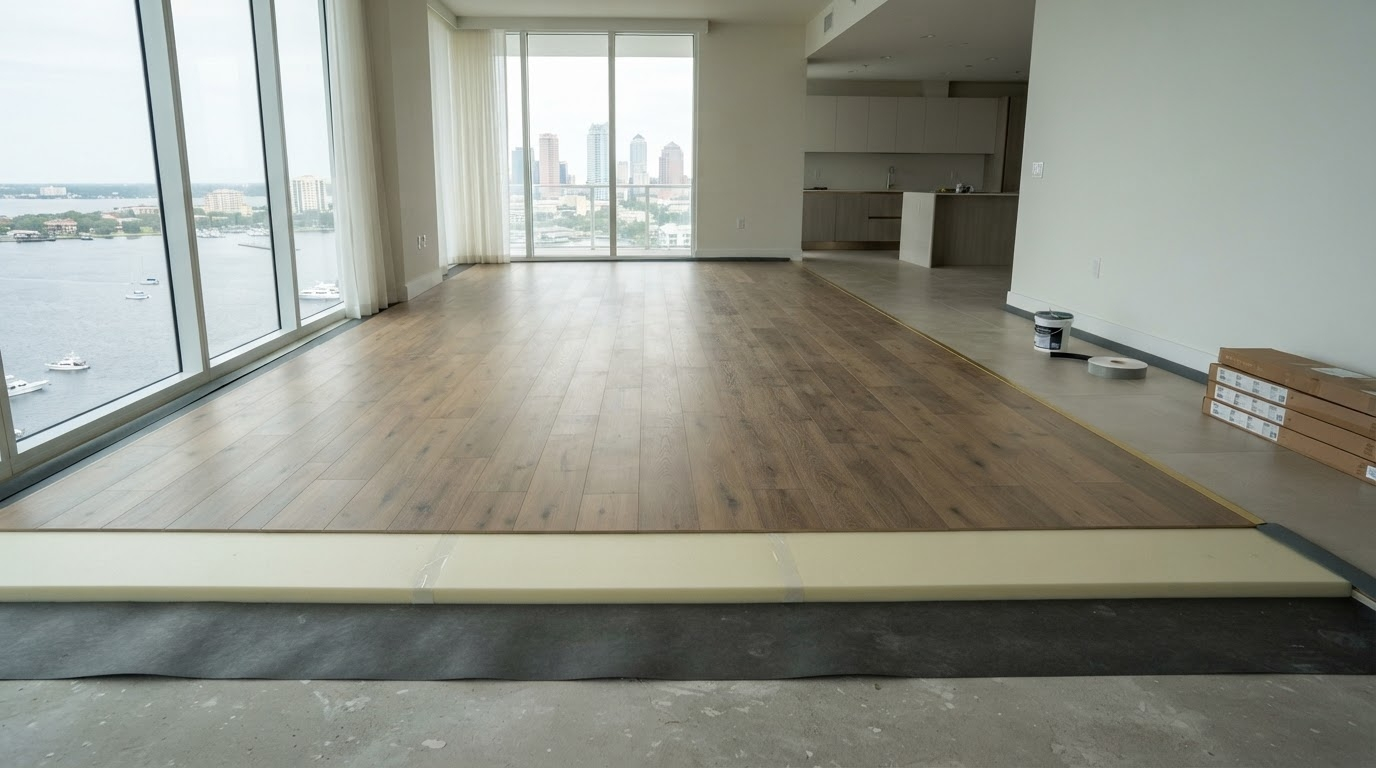
Sound control is arguably the single most important technical requirement in a condo flooring project, and it's the area where most HOA rejections happen. Multi-story buildings transmit impact noise (footsteps, dropped objects, furniture) directly through the floor-ceiling assembly, which is why associations regulate it so closely.
- STC ratings — Sound Transmission Class measures how well an assembly blocks airborne noise, like voices or music.
- IIC ratings — Impact Insulation Class measures how well an assembly blocks impact noise, like footsteps; this is the rating most condo HOAs focus on.
- Acoustic underlayment — A dedicated sound-control layer installed beneath hard-surface flooring specifically to raise the assembly's IIC rating.
- Cork underlayment — A natural, moisture-resistant option that performs well for impact sound and is a common HOA-approved choice.
- Rubber underlayment — Denser than cork and typically the highest-performing option for impact sound control, often required for tile installs.
- Foam underlayment — The most budget-friendly option, suitable for laminate and some LVP products, though generally lower-performing than cork or rubber.
- HOA approval requirements — Most associations require documentation showing the tested IIC rating of your specific flooring-plus-underlayment assembly, not just the underlayment alone.
Sound control matters just as much for your own comfort as it does for HOA approval. A well-chosen underlayment noticeably reduces the footstep and furniture noise you hear from neighbors above and below, a real quality-of-life upgrade in any multi-story Tampa building, whether it's required by your association or not.
The Condo Flooring Installation Process
A condo flooring project has several steps a single-family home project doesn't, mainly around HOA approval and building logistics.
The HOA approval window is usually the biggest variable in a condo project's total timeline; some associations turn around applications within a week, while others only meet monthly. Submitting your application as early as possible, with complete documentation, is the single best way to keep a project on schedule.
Best Flooring for Florida Condos by Lifestyle
The "best" flooring depends on how you actually live in your Tampa condo. Here's how to match material to lifestyle.
- Waterfront or coastal units — LVP or waterproof hybrid flooring handles higher ambient humidity and salt-air conditions with minimal maintenance.
- Pet owners — LVP and porcelain tile resist scratches and moisture from accidents far better than laminate or solid hardwood.
- Frequent travelers / seasonal residents — Low-maintenance LVP or tile means less upkeep needed while the unit sits empty for weeks at a time.
- Full-time, owner-occupied units — Engineered hardwood offers the strongest long-term resale value for owners planning to stay put.
- Renters / investment units — Durable, easy-to-clean LVP minimizes turnover costs between tenants.
- High-rise units above other residences — Prioritize the highest available IIC-rated underlayment regardless of material, to protect neighbor relations as much as HOA approval.
Common Condo Flooring Mistakes to Avoid
Most condo flooring headaches trace back to one of these avoidable mistakes.
- Ignoring HOA rules — Starting a project without confirming approval requirements first.
- Choosing the wrong underlayment — Selecting a product that doesn't meet the association's minimum IIC rating.
- Skipping moisture testing — Installing over a concrete slab without checking moisture content first.
- Hiring uninsured contractors — Many HOAs will reject or halt a project without proof of proper coverage.
- Ordering flooring before approval — Committing to materials before the HOA has formally signed off, risking a costly do-over.
- Not protecting common areas — Failing to pad hallways, elevators, and lobbies during material transport, which can lead to damage fees.
- Poor sound insulation — Installing hard-surface flooring without adequate underlayment, straining relationships with neighbors and risking HOA violations.
How to Choose a Condo Flooring Contractor in Tampa
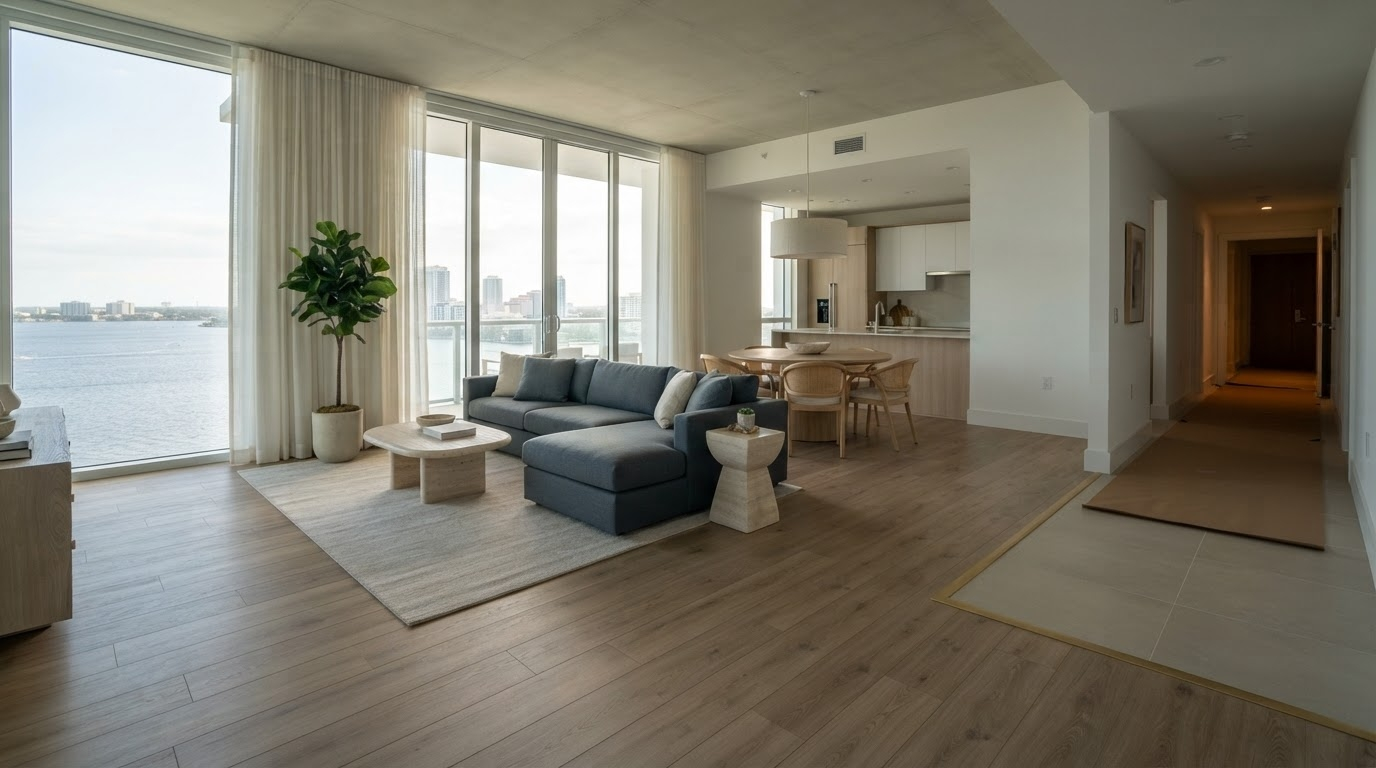
Condo projects demand a different skill set than a typical single-family install, mainly around navigating HOA paperwork and building logistics. Use this checklist before hiring anyone.
- Licensing — Confirm an active Florida contractor license and ask to see it. Remodels by Renov8 Plus is fully licensed under CGC #1537706.
- Insurance — Verify general liability and workers' compensation coverage, and confirm it meets your specific HOA's requirements.
- HOA experience — Ask how many condo association approvals they've navigated and whether they can help prepare your application paperwork.
- High-rise installation experience — Confirm they're familiar with service elevator logistics, loading dock scheduling, and common-area protection protocols.
- Warranty — Get the installation warranty in writing, separate from the manufacturer's product warranty.
- References — Ask for at least one reference from a recent condo project in a building similar to yours.
- Project management — Confirm a single point of contact will manage scheduling, HOA communication, and daily updates.
- Cleanup procedures — Ask exactly how debris is removed from the building daily; many associations require same-day cleanup, not end-of-project cleanup.
Conclusion: Getting Condo Flooring Right the First Time
A successful condo flooring project in Tampa comes down to sequencing: understand your HOA's requirements first, choose a material and underlayment combination that satisfies both your lifestyle and your building's sound standards, and hire a contractor who already knows how to navigate association paperwork and building logistics. Skip any of those steps, and even a beautiful new floor can turn into fines, delays, or a costly redo.
For condo owners across Downtown Tampa, Channelside, Harbour Island, Westshore, South Tampa, Clearwater Beach, St. Petersburg, Riverview, Brandon, and Wesley Chapel, getting the HOA approval and underlayment right the first time is what makes a flooring upgrade a genuine, lasting improvement, for you and for the neighbors above and below.
The best next step is a free consultation where we can review your association's flooring policy, recommend a compliant material and underlayment combination, and give you an itemized quote before you buy anything.
Schedule your free condo flooring consultation with Remodels by Renov8 Plus. We'll help you navigate HOA approval, choose a compliant flooring and underlayment combination, and give you a clear, honest quote.
GET YOUR FREE ESTIMATE
(656) 232-0999 | info@renov8plus.com | renov8plus.com