
Choosing the right flooring in Florida is not the same decision homeowners face in Colorado or Michigan. In Tampa Bay, your floors battle year-round humidity that regularly exceeds 70 percent, torrential summer rainstorms, the ever-present threat of hurricane-season flooding, and the salt air that drifts inland from the Gulf Coast. Pick the wrong material and you could be dealing with warped planks, mold growth beneath your baseboards, or adhesive failure within a few short years. For the complete overview, see our Flooring Installation Tampa: Complete Guide.
The best flooring for Florida humidity combines three qualities: moisture resistance, long-term durability, and a look that complements your home's style. Whether you live in a waterfront bungalow in South Tampa, a newer build in Wesley Chapel, or a 1990s ranch in Brandon, the right choice protects your investment and keeps your home beautiful through every rainy season. This guide breaks down every option, from luxury vinyl plank to porcelain tile to engineered hardwood, so you can make a confident, informed decision for your Tampa Bay home.
The best flooring for Florida humidity is luxury vinyl plank (LVP) for most rooms and porcelain tile for bathrooms, kitchens, and entryways. Both are 100 percent waterproof, resist mold and mildew, handle temperature fluctuations without expanding, and require minimal maintenance. For homeowners who prefer the warmth of real wood, engineered hardwood with a sealed plywood core is the strongest humidity-resistant wood-look option, though it should be kept away from wet areas. Avoid solid hardwood, traditional laminate, and wall-to-wall carpet in high-moisture zones.
Why Florida's Climate Changes the Flooring Equation
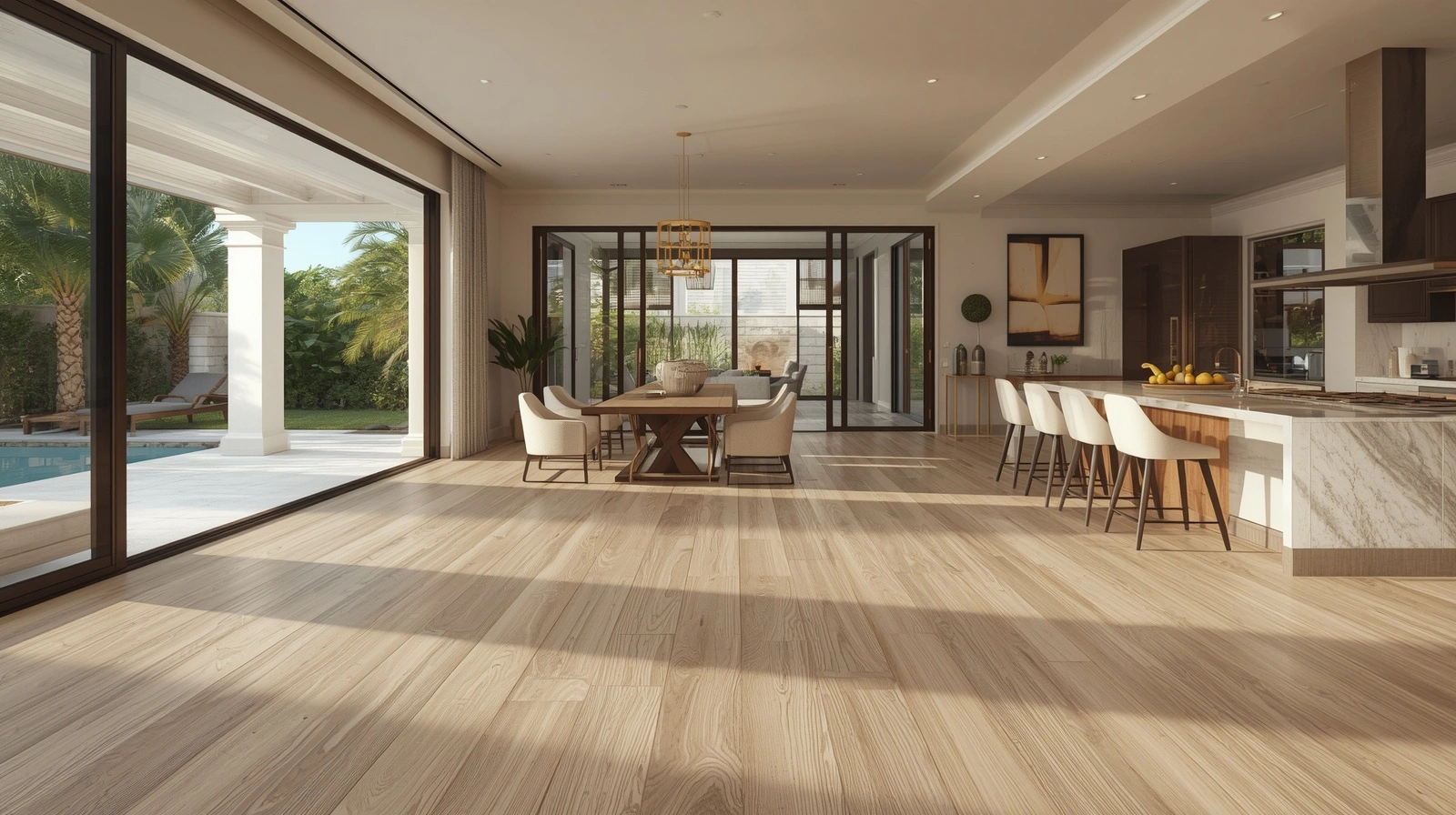
Florida is not just warm; it is a subtropical environment where moisture is a constant companion. Understanding the specific challenges helps you see why certain materials thrive here while others fail.
- Year-round humidity — Tampa's average relative humidity hovers between 65 and 80 percent. Materials that absorb moisture, like solid hardwood or carpet padding, expand, contract, and eventually break down.
- Heavy rainfall — Tampa receives roughly 50 inches of rain annually, much of it during intense summer thunderstorms. Water intrusion through doors, windows, and even concrete slabs is common.
- Hurricane and flood risk — Coastal flooding and storm surge can send standing water into homes. Flooring that cannot withstand temporary submersion often needs full replacement.
- Salt air exposure — Homes near the Gulf, from Clearwater to St. Petersburg, face accelerated corrosion and finish degradation from salt-laden air.
- Sand tracked indoors — Florida's sandy soil works its way inside, acting like fine sandpaper on soft flooring surfaces.
- Mold and mildew growth — Warm, damp conditions create an ideal breeding ground for mold. Flooring materials that trap moisture beneath them, like glue-down carpet or unsealed hardwood, are particularly vulnerable.
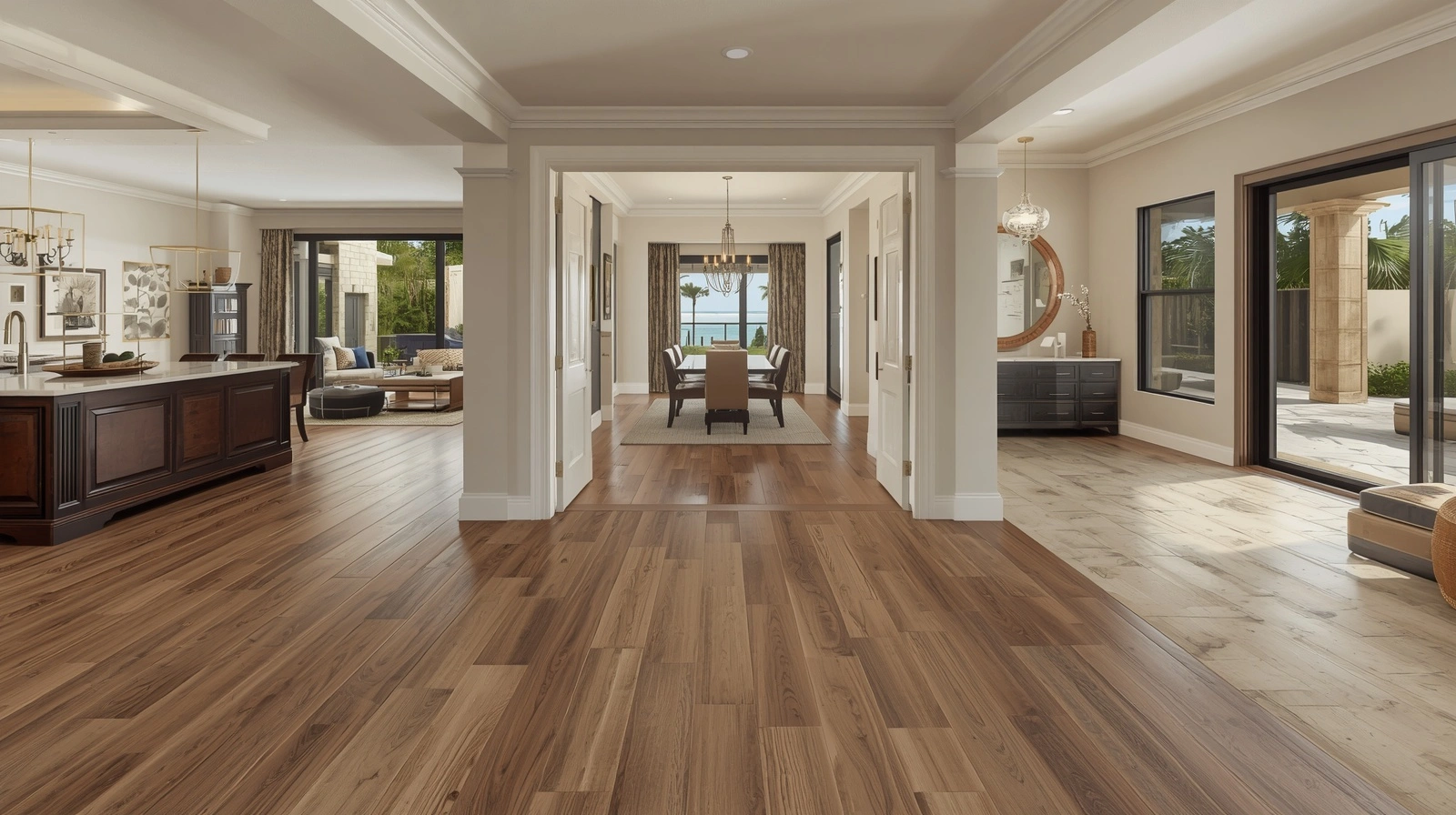
These factors mean that flooring selection in Florida requires a different calculus than in drier, cooler states. What works in Ohio may fail spectacularly in Tampa Bay.
Best Flooring Options for Florida Homes
Luxury Vinyl Plank (LVP)
Luxury vinyl plank has become the dominant flooring choice across Tampa Bay for good reason. Modern LVP is 100 percent waterproof with a rigid SPC (stone polymer composite) or WPC (wood polymer composite) core that will not swell, warp, or buckle regardless of humidity levels. It mimics the look of hardwood with increasingly realistic embossed textures, installs quickly with click-lock systems, and sits comfortably underfoot, especially with an attached underlayment.
- Lifespan — 15–25 years depending on wear layer thickness
- Best for — Living rooms, bedrooms, hallways, kitchens, and even bathrooms
- Maintenance — Sweep and damp mop; no waxing or refinishing needed
- Installed cost in Tampa — $5–$10 per square foot
If you want the look of hardwood without the humidity risk, LVP is the safest choice for most rooms in a Florida home.
Porcelain Tile
Porcelain tile is the gold standard for wet areas in Florida homes. Fired at extremely high temperatures, porcelain has a water absorption rate below 0.5 percent, making it virtually impervious to moisture. It handles UV exposure without fading, resists scratches from sand, and stays cool underfoot, a welcome feature during Tampa's sweltering summers.
- Lifespan — 25–50+ years with proper installation
- Best for — Bathrooms, kitchens, entryways, laundry rooms, sunrooms, and outdoor living areas
- Maintenance — Sweep and mop; seal grout lines every 1–2 years
- Installed cost in Tampa — $8–$16 per square foot
Wood-look porcelain planks have become hugely popular across Tampa Bay, offering the aesthetic of hardwood with the bulletproof moisture performance of tile.
Ceramic Tile
Ceramic tile is porcelain's more affordable cousin. It performs well in most interior applications, though its slightly higher water absorption rate (typically 3–7 percent) means it is better suited for walls, backsplashes, and indoor floors rather than outdoor use or areas prone to standing water. For budget-conscious Tampa homeowners, glazed ceramic tile delivers solid humidity resistance at a lower price point.
- Lifespan — 20–40 years
- Best for — Kitchens, bathrooms (walls and floors), and indoor living areas
- Maintenance — Sweep, mop, and seal grout lines regularly
- Installed cost in Tampa — $6–$12 per square foot
Engineered Hardwood
Engineered hardwood features a real wood veneer bonded to a cross-layered plywood or HDF core. This construction gives it significantly better dimensional stability than solid hardwood, allowing it to handle Florida's humidity swings without the dramatic expansion and contraction that ruins solid planks. However, it is not waterproof; extended water exposure will still cause damage.
- Lifespan — 15–30 years (can be refinished 1–2 times depending on veneer thickness)
- Best for — Living rooms, bedrooms, home offices, and dining rooms; avoid bathrooms and laundry rooms
- Maintenance — Sweep, vacuum, and use manufacturer-recommended wood floor cleaner
- Installed cost in Tampa — $8–$18 per square foot
If real wood is non-negotiable for your Tampa home, engineered hardwood is the only viable option. Pair it with a whole-home dehumidifier and keep indoor humidity between 35 and 55 percent for the best results.
Waterproof Laminate
A new generation of waterproof laminate flooring has entered the market, featuring sealed edges and water-resistant cores that address the traditional weakness of laminate in humid climates. While not as forgiving as LVP under prolonged water exposure, quality waterproof laminate offers a natural wood feel at a competitive price and performs well in dry rooms where spills are cleaned quickly.
- Lifespan — 10–20 years
- Best for — Bedrooms, living rooms, and home offices; not recommended for bathrooms
- Maintenance — Sweep and damp mop; avoid excessive water
- Installed cost in Tampa — $4–$8 per square foot
Natural Stone
Natural stone, including travertine, marble, and slate, is a luxury flooring material that performs beautifully in Florida homes when properly sealed. Travertine is especially popular across Tampa Bay for its warm, Mediterranean aesthetic and natural cooling properties. Stone requires regular sealing to prevent moisture absorption and staining, but it offers unmatched durability and timeless appeal for homeowners investing in a high-end finish.
- Lifespan — 50–100+ years with proper maintenance
- Best for — Entryways, living areas, outdoor patios (select stone types), and luxury kitchens
- Maintenance — Seal every 1–2 years; clean with pH-neutral products
- Installed cost in Tampa — $12–$30+ per square foot
| Flooring Type | Waterproof? | Lifespan | Cost/Sq Ft | Humidity Rating | Best Rooms |
|---|---|---|---|---|---|
| Luxury Vinyl Plank | Yes | 15–25 yrs | $5–$10 | Excellent | All rooms |
| Porcelain Tile | Yes | 25–50+ yrs | $8–$16 | Excellent | Wet areas, entryways |
| Ceramic Tile | Mostly | 20–40 yrs | $6–$12 | Very Good | Kitchens, baths (indoor) |
| Engineered Hardwood | No | 15–30 yrs | $8–$18 | Good | Living, bedrooms, offices |
| Waterproof Laminate | Partial | 10–20 yrs | $4–$8 | Good | Bedrooms, living rooms |
| Natural Stone | When sealed | 50–100+ yrs | $12–$30+ | Excellent | Entries, luxury spaces |
Which Flooring Should You Avoid in Florida?
Not every material is built for the Sunshine State. The following options frequently cause problems in Tampa Bay homes.
- Solid hardwood — Absorbs moisture readily. Planks swell in summer, shrink in winter, and develop gaps, cupping, and crowning. In Florida's climate, solid hardwood often requires replacement within 8–12 years, far short of its potential lifespan in drier regions.
- Traditional (non-waterproof) laminate — The fiberboard core wicks up moisture like a sponge. Once water penetrates the seams, the planks bubble, swell, and delaminate. Repairs are impossible; you must replace entire sections.
- Wall-to-wall carpet in wet areas — Carpet in bathrooms, kitchens, or laundry rooms traps moisture in the pad beneath, creating ideal conditions for mold and mildew growth that can affect indoor air quality and trigger allergies.
- Low-quality vinyl — Bargain-bin vinyl sheets and tiles often lack UV stabilizers, warping and discoloring under Florida's intense sunlight. They may also emit higher levels of VOCs as adhesives break down in heat.
Room-by-Room Flooring Recommendations for Tampa Homes
| Room | Top Recommendation | Why |
|---|---|---|
| Kitchen | Porcelain tile or LVP | Waterproof; handles spills, dropped items, heavy foot traffic |
| Bathroom | Porcelain tile | 100% waterproof; slip-resistant options available; pairs with heated floors |
| Living Room | LVP or engineered hardwood | Warm aesthetic; comfortable underfoot; handles humidity |
| Bedroom | LVP or waterproof laminate | Warm, quiet, budget-friendly; low moisture exposure |
| Laundry Room | Porcelain tile or LVP | Must withstand leaks and splashes; easy to clean |
| Entryway | Porcelain tile or natural stone | Handles sand, dirt, water tracked in; scratch-resistant |
| Sunroom | Porcelain tile | UV-resistant; cool underfoot; handles humidity and sun exposure |
| Home Office | LVP or engineered hardwood | Professional appearance; comfortable for rolling chairs with proper pad |
Flooring Cost Comparison: Tampa Bay Installed Prices (2026)
The following ranges reflect fully installed pricing in the Tampa Bay market, including materials, subfloor preparation, and professional labor. Actual costs vary based on room size, subfloor condition, material grade, and layout complexity.
| Flooring Type | Budget Range | Mid-Range | Premium |
|---|---|---|---|
| Luxury Vinyl Plank | $5–$6/sq ft | $7–$8/sq ft | $9–$10/sq ft |
| Porcelain Tile | $8–$10/sq ft | $11–$13/sq ft | $14–$16/sq ft |
| Ceramic Tile | $6–$8/sq ft | $9–$10/sq ft | $11–$12/sq ft |
| Engineered Hardwood | $8–$10/sq ft | $11–$14/sq ft | $15–$18/sq ft |
| Waterproof Laminate | $4–$5/sq ft | $6–$7/sq ft | $7–$8/sq ft |
| Natural Stone | $12–$16/sq ft | $17–$22/sq ft | $23–$30+/sq ft |
For a typical 200-square-foot Tampa Bay bathroom, installed flooring costs range from roughly $1,200 for waterproof laminate to $4,000 or more for premium porcelain tile. A 300-square-foot kitchen typically runs $2,400 to $5,400 with LVP or porcelain tile.
What to Expect: Flooring Installation Timeline
Professional flooring installation in a Tampa Bay home typically follows this process.
Most single-room flooring projects in Tampa Bay are completed within 2–7 days of active work. Whole-home flooring replacements typically take 1–3 weeks depending on square footage and material type.
2026 Flooring Trends for Florida Homes
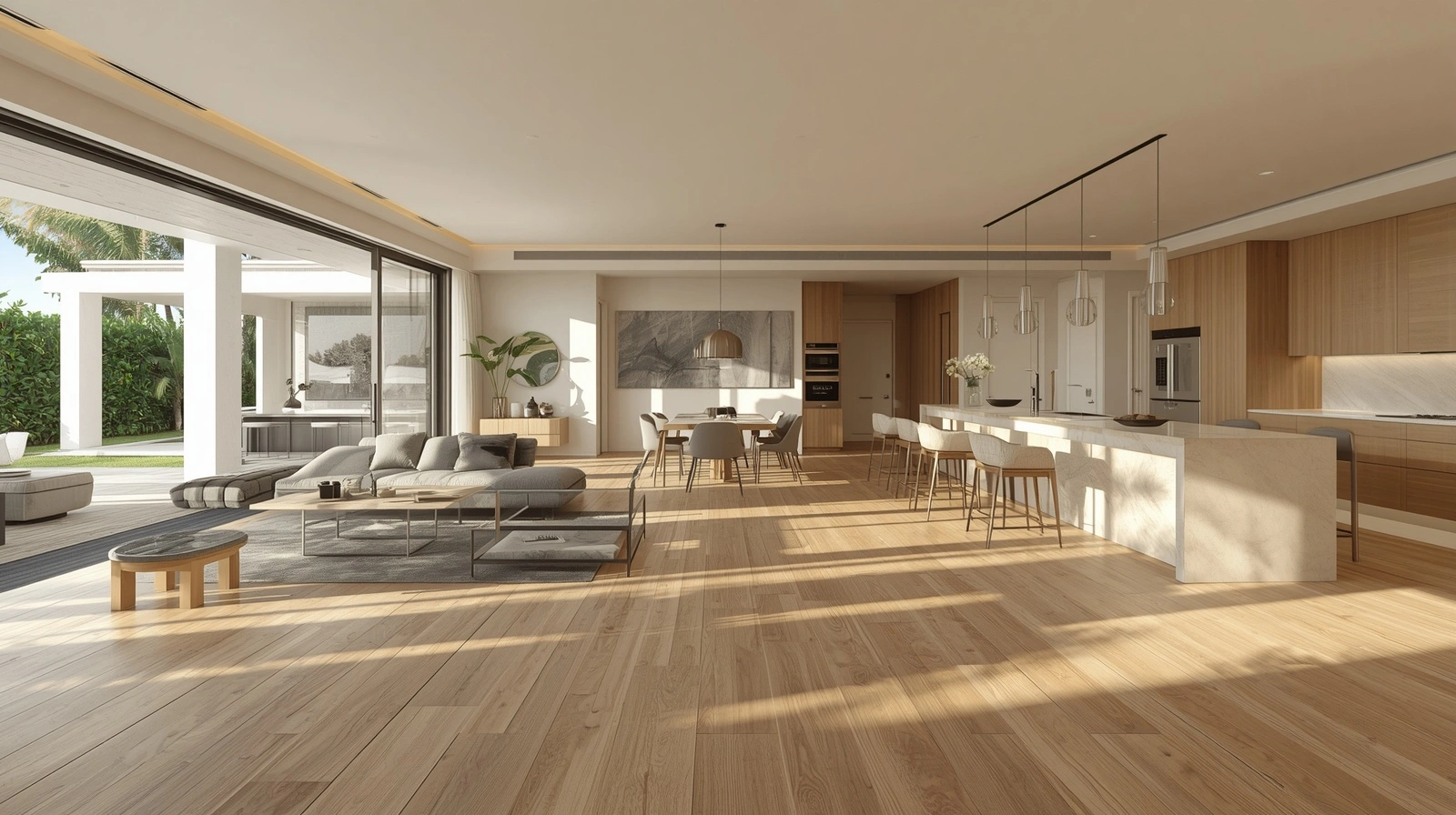
Tampa Bay homeowners are gravitating toward these flooring trends heading into 2026.
Common Flooring Mistakes Tampa Homeowners Make
- Choosing on price alone — The cheapest option often fails first. A $3-per-square-foot vinyl that delaminates within two years costs far more than a $7 LVP that lasts fifteen.
- Ignoring humidity performance — Falling in love with a solid hardwood at a showroom without considering how it will perform in your Tampa home during August is a recipe for expensive regret.
- DIY installation without experience — Improper subfloor preparation, especially failing to address moisture barriers on concrete slabs, leads to adhesive failure, mold growth, and voided manufacturer warranties.
- Skipping subfloor prep — Laying new flooring over an uneven, damaged, or moisture-compromised subfloor creates problems that surface within months. Proper preparation is the foundation of a lasting installation.
- Using the wrong flooring in bathrooms — Engineered hardwood, laminate, or carpet in a bathroom might look fine on Pinterest, but in a Florida bathroom it is a moisture disaster waiting to happen.
How to Choose a Flooring Contractor in Tampa Bay
Your flooring is only as good as the team that installs it. When evaluating contractors in the Tampa area, ask these questions.
- Are you licensed and insured? Verify an active Florida contractor license. Renov8 Plus holds CGC #1537706; you can confirm it on the Florida DBPR website.
- Do you offer product and installation warranties? A reputable contractor stands behind both the materials and the workmanship.
- How do you handle subfloor moisture testing? In Florida, contractors should test concrete slabs for moisture content before installing any flooring. Skipping this step is a red flag.
- Can you show me local projects? Ask for before-and-after photos and references from Tampa Bay homeowners with similar flooring.
- Do you manage the entire process? Design-build firms like Renov8 Plus handle material selection, demolition, subfloor prep, installation, trim, and cleanup so you deal with one team, not five subcontractors.
Best Flooring for Tampa Bay Home Value
If resale value is a priority, the data consistently favors hard-surface flooring over carpet in Florida. Real estate professionals across Tampa Bay report that updated flooring is one of the top three improvements buyers notice during showings. Here is how the major options rank for return on investment.
- Porcelain tile — Highest perceived value among Florida buyers. Durable, timeless, and expected in kitchens, bathrooms, and entryways. A strong choice for homes in Clearwater, St. Petersburg, and coastal areas.
- Luxury vinyl plank — Excellent ROI for the cost. Buyers appreciate the clean, modern look and low-maintenance appeal. Ideal for homes in Brandon, Riverview, Wesley Chapel, and Carrollwood.
- Engineered hardwood — Commands a premium in living spaces and bedrooms. Best reserved for climate-controlled rooms. Popular in upscale neighborhoods like South Tampa and Davis Islands.
- Natural stone — Maximum impact in luxury homes. Travertine entryways and marble kitchen floors signal high-end quality to discerning buyers.
Replacing dated carpet, worn laminate, or damaged tile throughout your home can increase perceived value by $10,000 to $25,000 or more depending on square footage and material quality.
Make the Right Flooring Choice for Your Tampa Bay Home
Florida's climate demands flooring that can stand up to relentless humidity, heavy rain, and the everyday realities of coastal living. Luxury vinyl plank and porcelain tile lead the field for their unbeatable combination of waterproof performance, durability, and style. Engineered hardwood fills the gap for homeowners who want real wood warmth in climate-controlled rooms, while natural stone delivers unmatched longevity and luxury for those investing in a forever home.
The key is matching the right material to the right room, investing in professional installation that addresses Florida's unique subfloor and moisture challenges, and working with a licensed, experienced contractor who understands how homes in Tampa, Brandon, Clearwater, Wesley Chapel, and the surrounding communities actually perform over time.
Remodels by Renov8 Plus helps Tampa Bay homeowners choose and install flooring that looks beautiful and performs flawlessly in Florida's demanding climate. From luxury vinyl plank to porcelain tile to natural stone, our design-build team handles every step: material selection, subfloor preparation, precision installation, trim, and cleanup, so you get stunning results without the stress. Schedule your free flooring consultation today.
(656) 232-0999 | info@renov8plus.com | renov8plus.com
Mon–Fri 9AM–7PM | Sat 10AM–3PM | Florida License CGC #1537706 | Serving Tampa Bay for 10+ Years