If you're remodeling a home in Tampa Bay, one of the biggest decisions you'll face is choosing between luxury vinyl plank (LVP) and tile flooring. Both options are popular across Tampa, Brandon, Wesley Chapel, Clearwater, Riverview, and St. Petersburg, but they perform very differently when it comes to Florida's heat, humidity, and indoor-outdoor lifestyle.
This isn't just about looks. The flooring you choose affects your home's comfort, maintenance requirements, resale value, and how well it holds up against daily life in the Sunshine State. Families with kids, pet owners along the coast, retirees aging in place, and investors flipping properties all have different needs, and the right flooring choice can save thousands of dollars over the life of your home.
At Remodels by Renov8 Plus, we've installed both LVP and tile across hundreds of Tampa Bay homes over the past decade. This guide shares everything we've learned so you can make a confident, informed decision for your next flooring project.
For most Tampa Bay homeowners, luxury vinyl plank (LVP) offers the best combination of waterproof performance, comfort underfoot, fast installation, and affordability. However, porcelain tile is the superior choice for outdoor-adjacent areas, Florida sunrooms, and homeowners prioritizing maximum lifespan and resale value in luxury markets. The best approach for many Tampa homes is a combination: tile in wet areas and high-traffic entryways, LVP in living spaces and bedrooms.
What Is Luxury Vinyl Plank (LVP) Flooring?
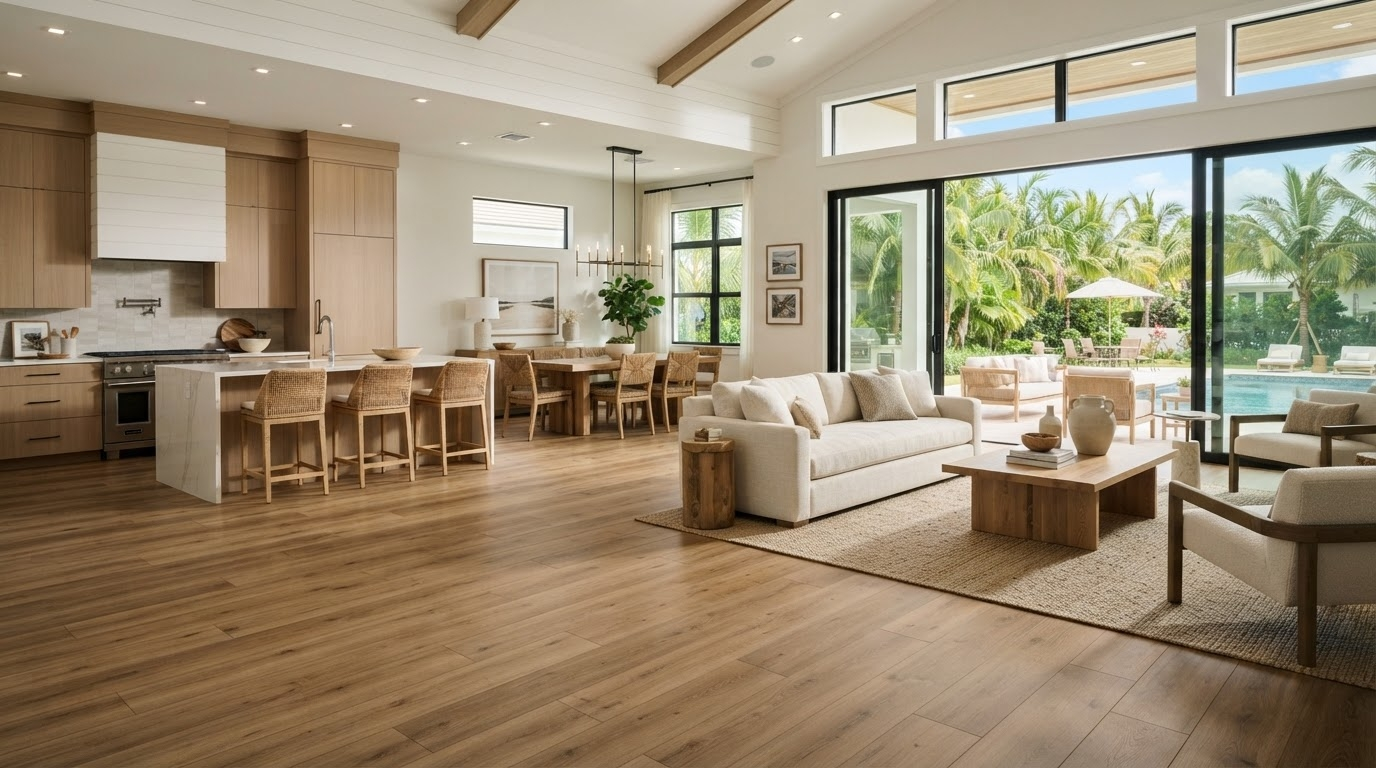
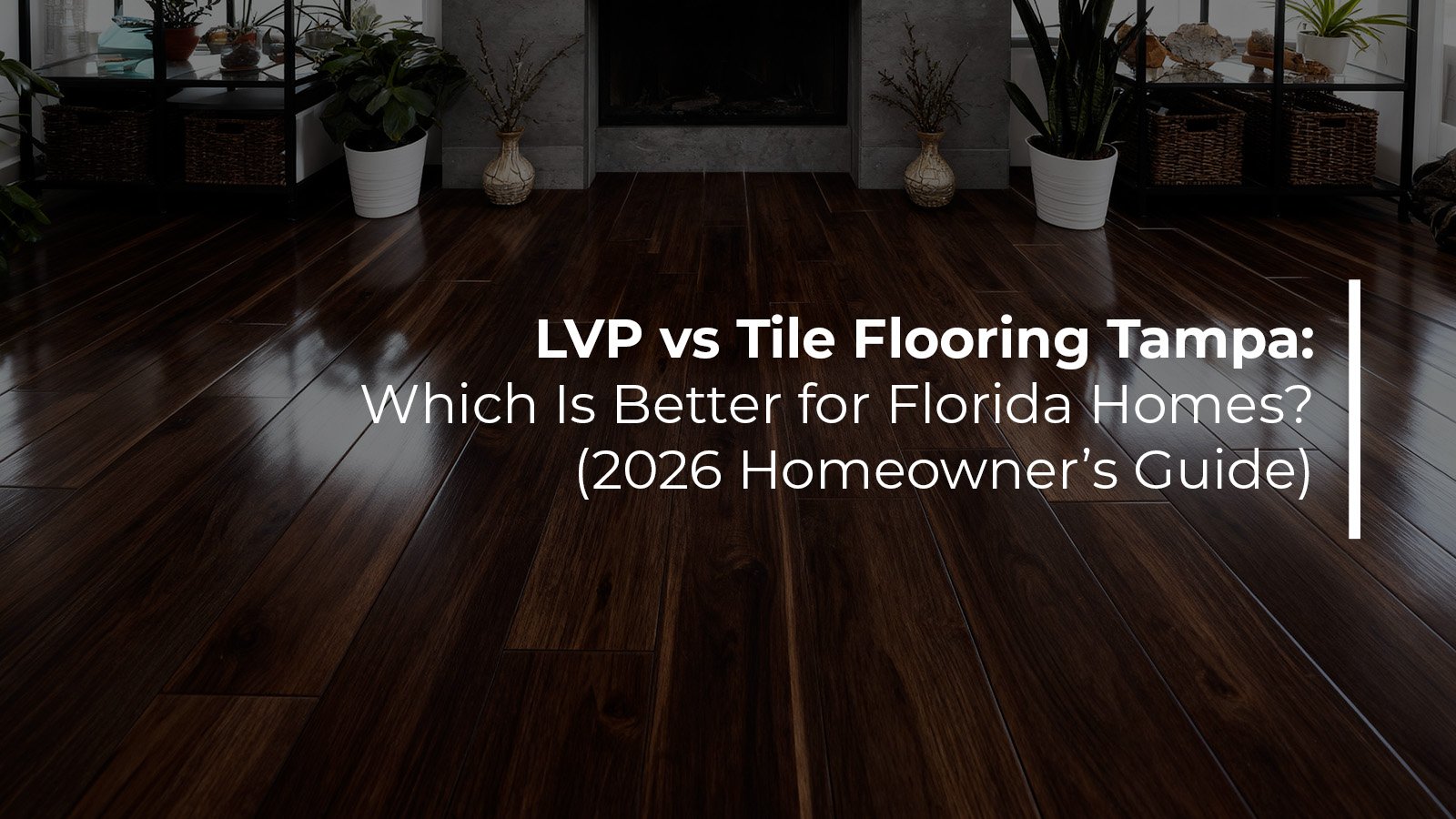
Luxury vinyl plank is an engineered flooring product designed to mimic the look of natural hardwood while delivering waterproof performance that real wood simply cannot match in Florida's climate. Modern LVP has evolved far beyond the thin vinyl sheets of decades past.
- Construction — Today's LVP features a multi-layer construction that includes a waterproof rigid core (typically SPC stone polymer composite or WPC wood polymer composite), a high-resolution photographic design layer, and a protective wear layer measured in mils. Premium brands offer 20-mil or thicker wear layers that resist scratches, stains, and everyday wear.
- Installation — Most LVP uses a click-lock floating installation system, meaning planks snap together over the existing subfloor without glue or nails. This makes professional installation faster and less disruptive to your household, a major advantage for Tampa families who need to stay in their homes during a remodel.
- Best Use Cases — Living rooms, bedrooms, kitchens, laundry rooms, hallways, and bathrooms. LVP is especially popular in open-concept Tampa homes where homeowners want a continuous, seamless floor from the kitchen through the family room.
What Is Tile Flooring?
Tile flooring encompasses ceramic tile, porcelain tile, and natural stone, each with distinct performance characteristics that matter for Tampa Bay homes.
Ceramic Tile is made from clay fired at lower temperatures. It's affordable and available in countless colors and patterns, but it's softer and more porous than porcelain, making it better suited for walls and light-traffic areas.
Porcelain Tile is fired at higher temperatures, producing a denser, harder, and less porous product. Porcelain is the tile of choice for Florida floors because of its superior water resistance and durability. It's available in large-format slabs, wood-look planks, and natural stone patterns.
Natural Stone (marble, travertine, slate) delivers unmatched luxury appeal but requires sealing and more maintenance, a consideration in Tampa's humid environment where moisture can penetrate unsealed stone.
LVP vs Tile Flooring: Complete Comparison Chart
| Factor | Luxury Vinyl Plank (LVP) | Tile Flooring |
|---|---|---|
| Material Cost | $2.50–$7.00/sq ft | $3.00–$15.00/sq ft |
| Installation Cost | $2.00–$4.00/sq ft | $5.00–$12.00/sq ft |
| Total Installed | $4.50–$11.00/sq ft | $8.00–$27.00/sq ft |
| Durability | High (20+ mil wear layer) | Very High (porcelain) |
| Lifespan | 15–25 years | 50–100+ years (porcelain) |
| Water Resistance | 100% waterproof core | Water-resistant (grout needs sealing) |
| Comfort Underfoot | Warm, cushioned | Hard, cold (can add radiant heat) |
| Installation Time | 1–3 days (avg room) | 3–7 days (avg room) |
| Maintenance | Sweep and mop | Sweep, mop, reseal grout periodically |
| Scratch Resistance | Good (varies by mil) | Excellent (porcelain) |
| Pet Friendly | Excellent | Excellent (hard on joints) |
| Child Friendly | Excellent (soft, warm) | Good (hard surface) |
| Resale Value | Good | Excellent (especially porcelain) |
| Design Options | Wood, stone, concrete looks | Unlimited patterns, mosaics, custom |
| Florida Humidity | Excellent (no expansion) | Excellent (inert material) |
Flooring Cost Comparison: Tampa Bay 2026 Pricing
Flooring costs in the Tampa Bay market reflect both material quality and the skilled labor required for proper installation in Florida's climate. Here's what homeowners across Tampa, Carrollwood, Lutz, Odessa, and surrounding communities can expect to budget in 2026.
| Cost Category | LVP (per sq ft) | Tile (per sq ft) |
|---|---|---|
| Material Only | $2.50–$7.00 | $3.00–$15.00 |
| Professional Install | $2.00–$4.00 | $5.00–$12.00 |
| Subfloor Prep | $0.50–$1.50 | $1.00–$3.00 |
| Demolition/Removal | $1.00–$2.00 | $1.50–$3.00 |
| Total per Sq Ft | $4.50–$11.00 | $8.00–$27.00 |
| 1,000 Sq Ft Total | $4,500–$11,000 | $8,000–$27,000 |
These ranges reflect the Tampa Bay market as of 2026. Actual costs depend on material selection, subfloor condition, room complexity, and whether the flooring is part of a larger remodel. Remodels by Renov8 Plus provides free, itemized estimates so you know exactly what your project will cost before work begins.
Which Flooring Lasts Longer in Florida?
Porcelain tile is the clear winner for longevity. Properly installed porcelain tile can last 50 to 100 years or more, often outlasting the home itself. Ceramic tile typically lasts 20 to 50 years depending on traffic and quality. Luxury vinyl plank has a lifespan of 15 to 25 years, with premium products at the higher end of that range.
In Tampa's climate, both materials hold up well against humidity. However, LVP can be affected by prolonged direct sunlight through unshaded windows, something to consider in Florida sunrooms. Porcelain tile is completely unaffected by UV exposure, making it the better option for sun-drenched rooms and covered outdoor spaces.
The practical difference comes down to this: tile is a once-in-a-lifetime investment, while LVP may need replacement once during your ownership. For homeowners planning to stay in their Tampa home for 20+ years, the higher upfront cost of porcelain tile may deliver better lifetime value.
Best Flooring for Every Room in Your Tampa Home
Kitchen
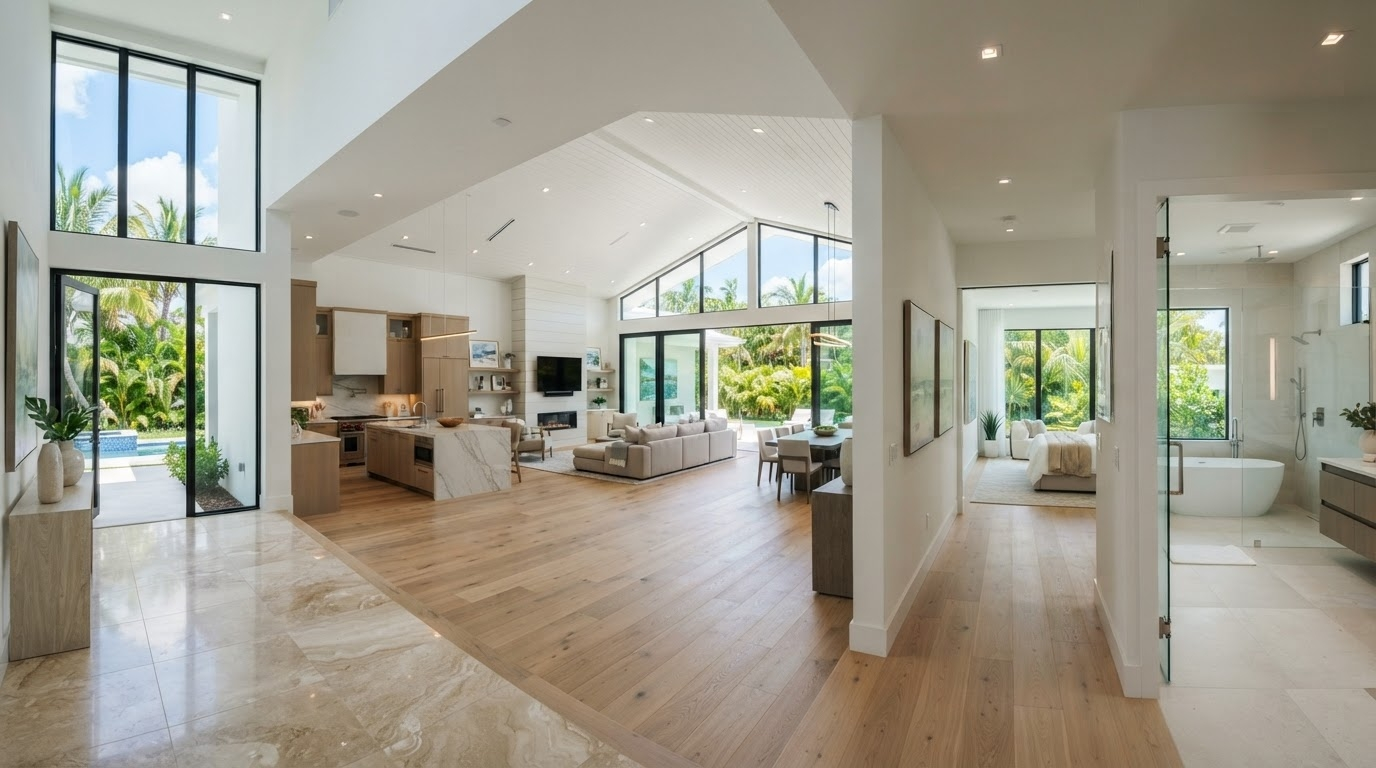
Both options work exceptionally well in Tampa kitchens. LVP is more forgiving if you drop heavy pots or stand for long cooking sessions; the cushioned core reduces fatigue. Porcelain tile offers superior heat resistance near ovens and a premium look that appeals to luxury buyers. Our recommendation: LVP for comfort-first families, porcelain tile for high-end kitchen remodels.
Bathroom
Porcelain tile remains the gold standard for bathroom floors. The combination of water exposure, shower splash zones, and humidity makes bathrooms the one room where tile's inert, waterproof properties genuinely outperform LVP. That said, modern waterproof LVP is absolutely viable in bathrooms and is increasingly popular in Tampa bathroom remodels where budget is a priority.
Living Room and Bedrooms
LVP dominates here. The warmth underfoot, sound-dampening properties, and wood-look aesthetics make LVP the preferred choice for living spaces and bedrooms across Tampa Bay homes. Tile can feel cold and hard in these comfort-oriented rooms unless you invest in radiant heating underneath.
Laundry Room
LVP is the practical winner for laundry rooms. Its waterproof core handles washing machine overflow without damage, and the cushioned surface is comfortable during folding sessions. Tile works well too, but the lower cost of LVP makes it a smart choice for this utilitarian space.
Florida Sunroom and Garage Entry
Porcelain tile is the clear best choice for sunrooms and garage-to-house transitions. These areas experience significant UV exposure, temperature swings, tracked-in sand, and occasional moisture, all conditions where tile excels and LVP may struggle over time. Large-format porcelain tiles in a matte finish are especially popular in Tampa sunrooms.
Which Flooring Is Right for You? Tampa Homeowner Scenarios
- Families with Kids: LVP — The cushioned surface is safer for falls, warmer for crawling babies, and easier to clean after the inevitable spills. Many Tampa families with young children choose LVP throughout the main living areas and tile in bathrooms only.
- Pet Owners: LVP with a 20-mil or thicker wear layer — Premium LVP resists scratches from pet nails far better than lower-quality options, and it's easier on aging joints for larger dogs compared to hard tile surfaces. Tile wins if your pets track in heavy sand and mud from the yard.
- Luxury Homeowners: Porcelain tile or natural stone — In Davis Islands, Palma Ceia, and Clearwater Beach luxury homes, buyers expect high-end tile: large-format porcelain, marble, or travertine. LVP, regardless of quality, may not meet luxury buyer expectations at resale.
- Rental Properties and Investors: LVP — The combination of lower installation cost, durability, easy repair (individual planks can be replaced), and modern aesthetics makes LVP the best ROI flooring for Tampa rental properties.
- Retirees and Aging in Place: LVP with a textured, slip-resistant finish — The cushioned core is easier on joints during daily walking, and the waterproof surface handles the occasional bathroom splash without creating a fall hazard. For retirees in South Tampa and Sun City Center, LVP provides both safety and comfort.
- Waterfront and Pool Homes: Porcelain tile for pool-adjacent areas and entryways where chlorinated water, sand, and heavy foot traffic are constant. Transition to LVP in bedrooms and private living spaces for comfort.
Why Florida's Climate Changes Everything About Your Flooring Decision
Tampa Bay's subtropical climate creates unique challenges that mainland contractors don't face. Understanding these factors is essential for choosing flooring that performs year after year.
- Humidity — Tampa's average relative humidity ranges from 60% to 90% year-round. Natural hardwood expands, warps, and cups in this environment, which is why so many Tampa homeowners are replacing damaged hardwood with LVP or tile. Both LVP and porcelain tile are dimensionally stable in high humidity, but proper acclimation is critical for LVP installation.
- Hurricane Season and Flooding — Porcelain tile is virtually indestructible after water exposure. LVP's waterproof core handles standing water for limited periods, but prolonged flooding can compromise the locking system and subfloor beneath. In flood-prone areas of Riverview, Brandon, and low-lying parts of South Tampa, tile offers a significant advantage.
- Sandy Feet and Pool Traffic — Sand is abrasive. Porcelain tile's hardness makes it nearly impervious to tracked-in sand, while LVP's wear layer can show micro-scratches over time in high-sand-traffic areas. Regular sweeping (or a good entry mat) minimizes this issue for LVP.
- Indoor-Outdoor Living — Florida homes blur the line between indoor and outdoor spaces. Porcelain tile transitions seamlessly from covered lanais to interior rooms, creating a cohesive flow. LVP should not be used in outdoor or uncovered spaces.
- Moisture from Concrete Slabs — Many Tampa homes are built on concrete slabs, which can transmit ground moisture. Both LVP and tile handle this well when installed correctly, but moisture testing before installation is a step your contractor should never skip.
Flooring Installation Timeline: What Tampa Homeowners Should Expect
Here's how LVP and tile compare for a typical 500-square-foot area in a Tampa home.
At Remodels by Renov8 Plus, we provide a detailed project schedule before work begins so you can plan around the installation, whether it's coordinating with school schedules, work-from-home days, or an upcoming gathering you're hosting.
Common Flooring Mistakes Tampa Homeowners Make
Choosing Based on Price Alone
The cheapest LVP or tile won't deliver the performance Florida homes demand. A $1.50/sq ft vinyl plank may look fine initially but fail within three to five years under real-world conditions. Invest in quality materials that match Tampa's climate demands.
Ignoring Moisture Resistance Ratings
Not all LVP is truly waterproof; look for SPC (stone polymer composite) core products specifically rated for 100% waterproof performance. For tile, ensure your installer uses a waterproof membrane in wet areas.
Skipping Subfloor Preparation
Florida's concrete slab foundations can have imperfections that telegraph through thin flooring. Proper leveling and moisture testing before installation prevents costly callbacks and premature failure.
DIY Installation Without Experience
Click-lock LVP is marketed as DIY-friendly, and for simple rooms it can be. But Tampa homes with complex layouts, transitions between rooms, and moisture concerns benefit significantly from professional installation. Tile installation should almost always be handled by an experienced installer; improper mortar application or lippage creates tripping hazards and voids warranties.
Choosing the Wrong Flooring for the Room
LVP in a sunroom or tile in a bedroom are technically possible but not ideal. Match the flooring material to how each room is actually used in your daily life.
2026 Flooring Trends in Tampa Bay
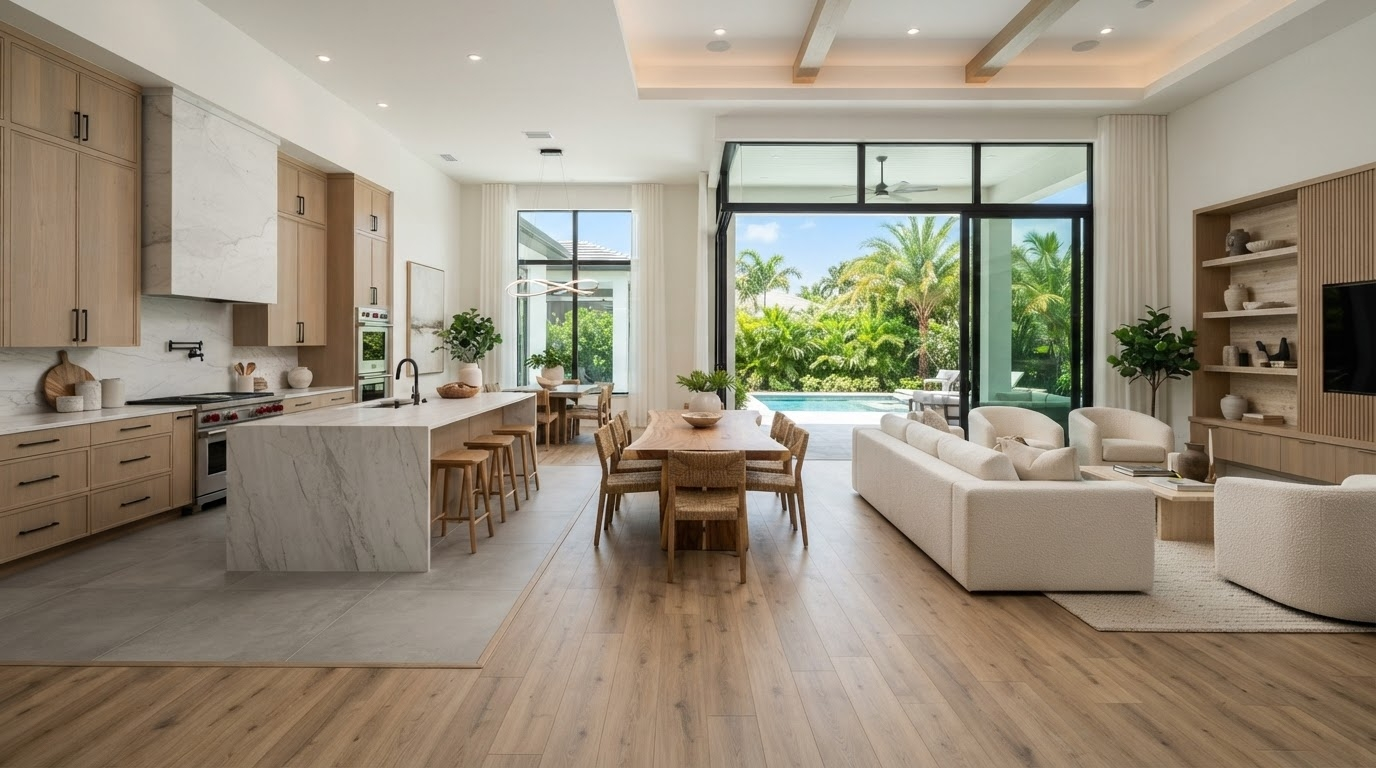
Tampa Bay's flooring preferences are shifting toward warmer tones, larger formats, and natural textures that complement Florida's coastal aesthetic.
Which Flooring Adds More Value to Your Tampa Home?
Both LVP and tile are highly desirable among Tampa Bay homebuyers, but their impact on resale value differs by market segment.
Porcelain tile generally delivers the highest resale impact in Tampa's mid-to-luxury market. Buyers in Davis Islands, Hyde Park, Westchase, and Palma Ceia expect quality tile, and it signals long-term investment. According to industry data, flooring upgrades can recoup 70% to 80% of their cost at resale, with tile trending toward the higher end.
LVP is increasingly accepted and even preferred in entry-level and mid-range Tampa markets, particularly in Town 'n' Country, Brandon, Riverview, and Wesley Chapel. Modern LVP is visually appealing, and buyers appreciate its practical benefits. For investment properties and rental homes, LVP's lower upfront cost and strong durability deliver the best return on investment.
For homes valued under $500K in the Tampa Bay market, LVP and tile perform comparably at resale. For homes above $500K, porcelain tile provides a noticeable value advantage.
Making Your Decision: LVP vs Tile for Your Tampa Home
There's no single "right" answer to the LVP vs tile debate; the best flooring depends on your specific home, lifestyle, budget, and long-term plans. What we can tell you after installing both materials across hundreds of Tampa Bay homes is this: both options are excellent choices for Florida living when you select quality materials and work with experienced installers who understand our climate.
If you prioritize comfort, affordability, and fast installation, luxury vinyl plank is likely your best fit. If you value maximum durability, timeless luxury, and the best possible resale value, porcelain tile is worth the investment. And for many Tampa homeowners, the smartest strategy is a combination of both, using each material where it performs best throughout the home.
Schedule your free in-home flooring consultation with Remodels by Renov8 Plus. We'll assess your space, discuss your lifestyle and design preferences, show you material samples, and provide a detailed, no-obligation estimate. Remodels by Renov8 Plus has served Tampa Bay homeowners for over a decade, delivering expert flooring installation, kitchen remodels, bathroom renovations, and full-home transformations across Tampa, Brandon, Riverview, Wesley Chapel, Clearwater, St. Petersburg, Carrollwood, Lutz, Odessa, and surrounding communities. Every project includes a dedicated project manager, transparent pricing, and craftsmanship built to last.
(656) 217-1555 | remodels.renov8plus.com
Licensed Florida Contractor — CGC #1537706