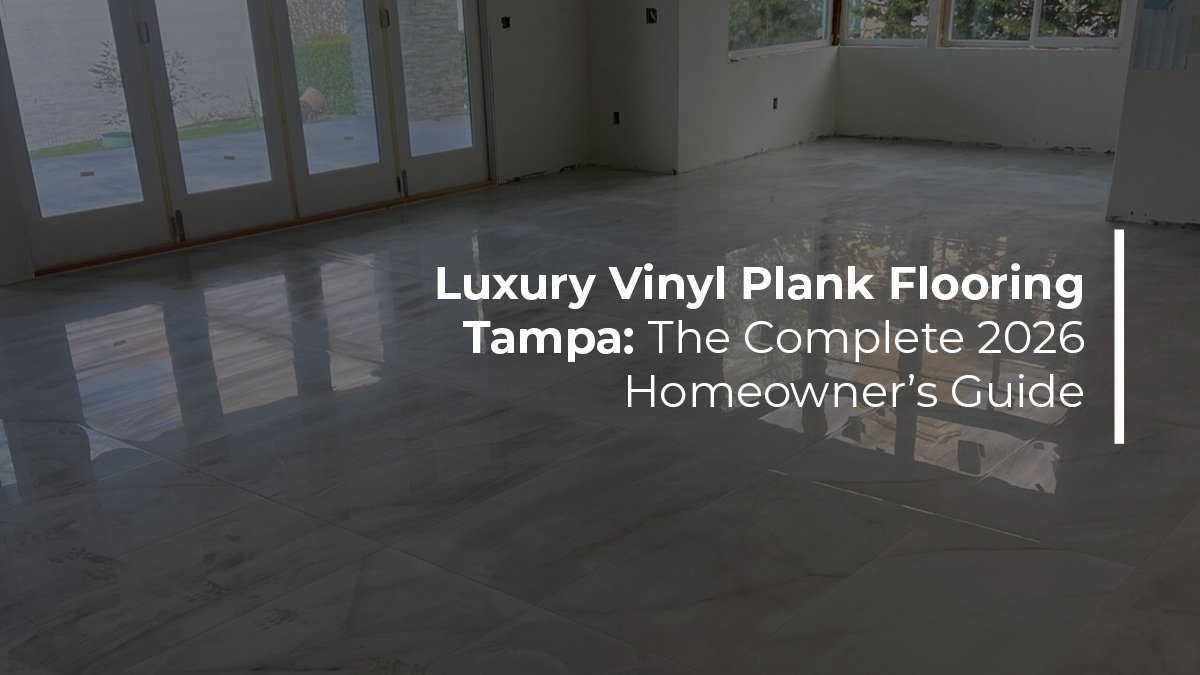
Luxury Vinyl Plank has gone from a budget alternative to the single most requested flooring material in Tampa Bay remodels, and it happened fast. Homeowners who spent years choosing between "beautiful but risky" hardwood and "durable but cold-looking" tile suddenly discovered a third option that replicates the warmth of real wood, cuts down on installation timelines, and shrugs off water without a second thought.
That waterproof performance is exactly why choosing premium Luxury Vinyl Plank flooring Tampa homes need has taken over the local market. Between our intense summer rainy seasons, year-round humidity, sandy feet tracking in from the Gulf beaches, and pool traffic, Florida presents one of the toughest climates in the country for interior surfaces. Modern plank flooring is engineered specifically to handle these elements. With ultra-realistic wood-look finishes, advanced textures, and micro-beveled edges, it is increasingly difficult to tell apart from authentic hardwood even up close.
Whether you are executing targeted kitchen remodels that require spill-proof surfaces, updating high-moisture zones during comprehensive bathroom remodels, or executing full-scale home renovations to modernize your layout, selecting the right wear layer and core material makes all the difference. This guide covers everything a Tampa homeowner needs before pulling the trigger: how the material is actually built, the vital performance differences between SPC and WPC cores, realistic 2026 installed costs by room, how it stacks up against tile, and the exact preparation steps required for a lifetime warranty. Every price range and layout recommendation below reflects what the Renov8 Plus team actually installs on real Tampa Bay job sites, not a manufacturer's marketing copy.
Yes. LVP flooring is 100% waterproof (SPC and WPC cores), making it one of the best flooring choices for Tampa's humidity, rainy season, and pool-and-beach lifestyle. Installed cost typically runs $6–$14 per square foot, with a lifespan of 10–25+ years depending on wear layer thickness. It performs especially well in kitchens, bathrooms, laundry rooms, and whole-home installations where waterproofing, durability, and low maintenance matter most.
What Is Luxury Vinyl Plank (LVP)?
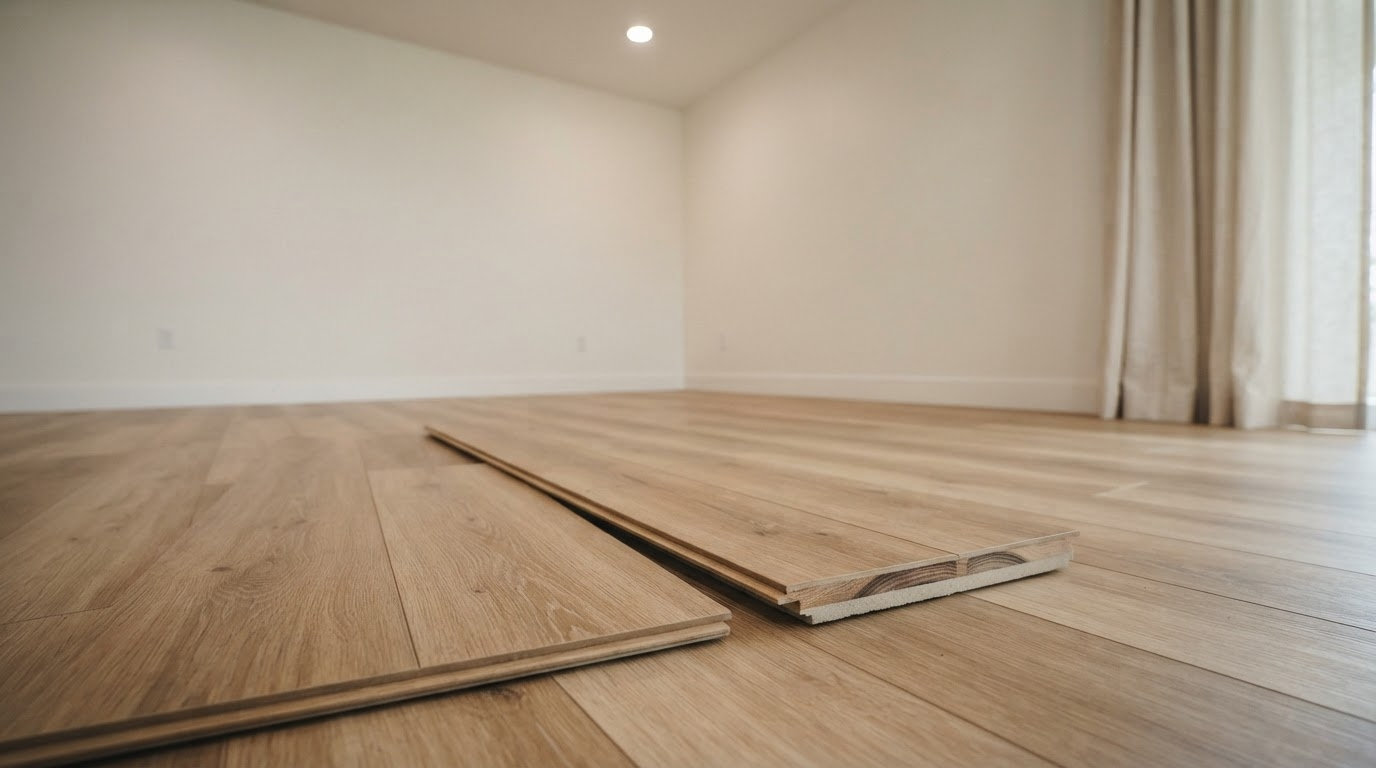
Luxury Vinyl Plank is a multi-layer synthetic flooring product engineered to replicate the look of hardwood while remaining 100% waterproof. Unlike sheet vinyl or old-style vinyl tile, LVP is built in individual plank-shaped pieces with a rigid core, a photographic wood-grain layer, and a protective wear layer on top, which is why quality LVP is genuinely difficult to distinguish from real hardwood once installed.
The wear layer thickness, measured in mils, is the single biggest factor in how long an LVP floor lasts. A 6–12 mil wear layer suits light residential use; 20 mil or higher is what we recommend for busy Tampa Bay households with kids, pets, or rental turnover.
The core layer determines whether a product is classified as SPC (Stone Plastic Composite) or WPC (Wood Plastic Composite), the two dominant LVP core types. Both cores are fully waterproof; the difference comes down to rigidity, underfoot feel, and how forgiving the product is over an imperfect subfloor.
Waterproof performance comes from two things working together: the core material itself (which does not swell or degrade when wet, unlike wood-fiber laminate cores) and a sealed click-lock or glued seam between planks that keeps water from reaching the subfloor. That combination is why a properly installed LVP floor can sit directly next to a shower, washing machine, or sliding glass door without the swelling and delamination risk that comes with laminate or engineered wood.
LVP installs three ways: click-lock floating, glue-down, and loose lay, each suited to different rooms, subfloors, and budgets. We break down the pros and cons of each installation method, along with SPC vs. WPC cores, in the section below.
Types of LVP Flooring
LVP is not one product, it is a category with real differences in core material and installation method. Choosing the right combination matters more for how the floor performs in your specific Tampa home than the brand name on the box.
| Type | Best Applications | Cost Range (Material) | Durability | Install Difficulty |
|---|---|---|---|---|
| SPC Flooring | Kitchens, whole-home, rentals, high-traffic | $3–$7/sq ft | Excellent | Easy–Moderate |
| WPC Flooring | Bedrooms, living rooms (comfort-focused) | $4–$8/sq ft | Very Good | Easy–Moderate |
| Glue-Down LVP | Commercial-grade use, large open areas | $3–$6/sq ft | Excellent | Moderate–Difficult |
| Click-Lock Floating | Most residential rooms | $3–$8/sq ft | Very Good–Excellent | Easy |
| Loose Lay Vinyl | Rentals, rooms needing easy replacement | $3–$6/sq ft | Good | Easy |
SPC Flooring (Stone Plastic Composite)
SPC has a dense, rigid core made from limestone powder and stabilizers, which makes it the most dent- and impact-resistant LVP core on the market and our top recommendation for Tampa kitchens, whole-home installs, and rental properties. Pros: maximum durability, fully waterproof, excellent for heavy furniture and appliances, performs well over slightly imperfect subfloors. Cons: harder underfoot than WPC, and the rigid core transmits more sound unless paired with a quality underlayment.
WPC Flooring (Wood Plastic Composite)
WPC uses a foamed core with wood or bamboo fibers, giving it a softer, warmer feel underfoot and slightly better sound absorption than SPC. Pros: more comfortable to stand on for long periods, quieter, still fully waterproof. Cons: the softer core is more prone to denting under heavy furniture, thicker planks cost more, and WPC generally is not rated for exterior or below-grade commercial use the way SPC is.
Glue-Down LVP
Glue-down LVP is adhered directly to the subfloor with flooring adhesive, creating an extremely stable, low-profile floor with minimal flex. Pros: excellent for large open-concept areas, works well over radiant heat, virtually eliminates plank movement. Cons: installation is labor-intensive and unforgiving of mistakes, subfloor prep must be near-perfect, and repairs are more difficult than with a floating floor.
Click-Lock Floating Floors
Click-lock is the most common LVP installation method in Tampa Bay homes today. Planks interlock along a tongue-and-groove edge and "float" over the subfloor without glue or nails. Pros: faster installation, more forgiving of minor subfloor imperfections, easier to repair or replace individual planks, DIY-friendly for confident homeowners. Cons: requires a proper expansion gap at walls and transitions, and lower-quality click systems can separate over time if installed incorrectly.
Loose Lay Vinyl
Loose lay planks use a heavy, dimensionally stable backing with high friction that holds the floor in place without glue or locking mechanisms, sometimes secured with adhesive only at the perimeter. Pros: fastest installation method, easiest to replace individual damaged planks, popular in rental properties for exactly that reason. Cons: fewer premium design options than SPC or WPC, and it performs best on smaller, contained areas rather than large open floor plans.
LVP Installation Costs in Tampa
LVP pricing spans a wide range because "luxury vinyl plank" covers everything from budget builder-grade product to premium rigid-core designer lines. The figures below reflect installed cost, material, labor, underlayment, trim, and cleanup, broken out by product grade.
Six factors drive most of the difference between quotes: wear layer thickness (thin 6 mil vs. thick 20+ mil), core type (SPC vs. WPC), plank size and format (wide planks and herringbone layouts add labor), subfloor condition and prep needed, whether old flooring must be removed and disposed of, and installation method, glue-down typically costs more in labor than click-lock floating.
Cost by Room
Do not shop LVP by material price alone. A $2/sq ft plank with a thin 6 mil wear layer will show scratches and wear within a few years in a busy Tampa household, a 20 mil wear layer costs more upfront but typically saves money over the life of the floor by avoiding an early replacement.
LVP vs. Other Flooring Options
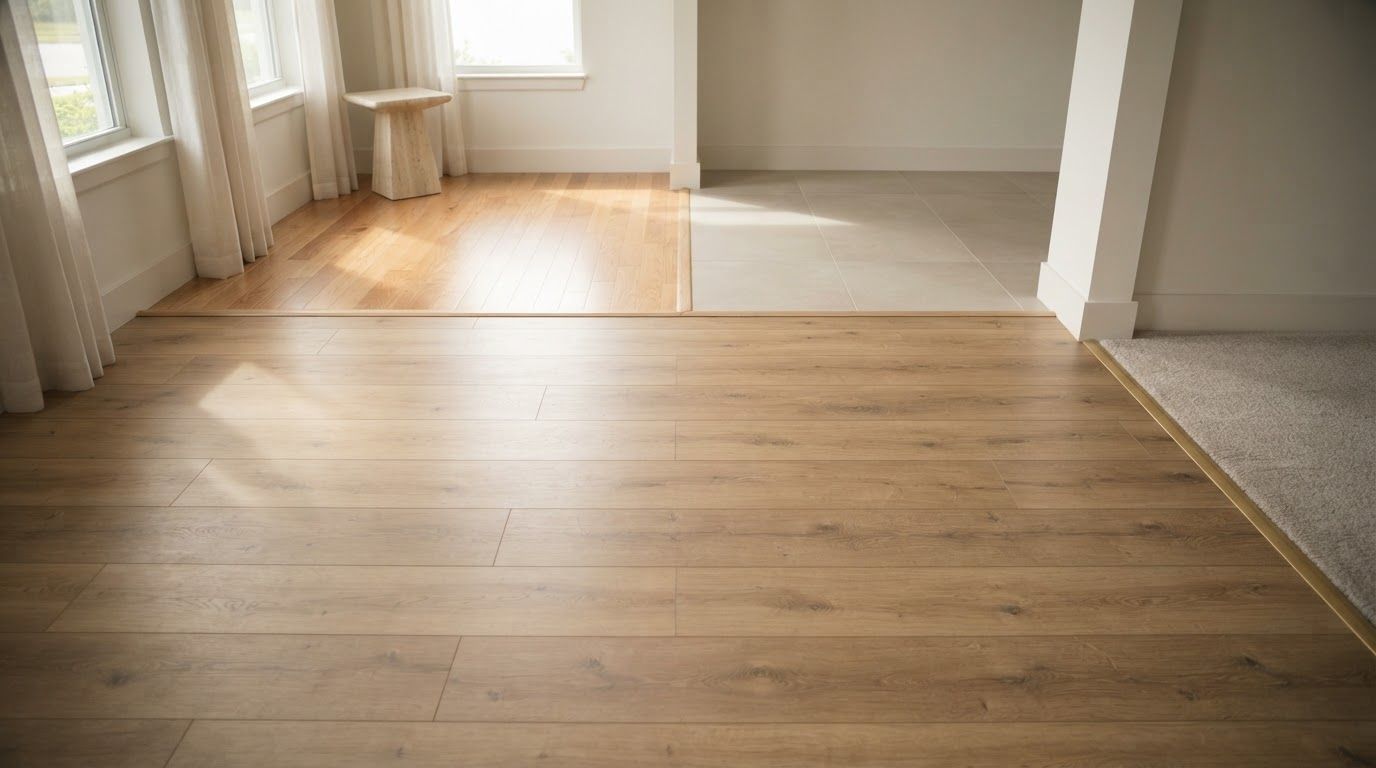
LVP is not automatically the right choice for every room or every homeowner. Here is how it stacks up against the four flooring types Tampa homeowners compare it to most often.
LVP vs. Tile
Choose LVP if you want a warmer, more comfortable surface underfoot with faster, lower-cost installation. Choose tile if maximum longevity is the priority; a well-installed porcelain floor can outlast LVP by a decade or more, and tile remains the better choice for shower walls specifically. Many Tampa homeowners use both: tile in wet zones, LVP everywhere else.
LVP vs. Hardwood
Real hardwood is genuinely risky in a Florida home; humidity swings cause boards to expand, contract, cup, and gap over time, and any standing water is a serious problem. LVP replicates hardwood's look, including realistic embossed grain texture, without that risk. If authentic solid wood is a non-negotiable priority, it can still work in a climate-controlled, low-humidity, moisture-free room, but expect higher maintenance and periodic refinishing.
LVP vs. Engineered Hardwood
Engineered hardwood has a real wood veneer over a plywood core, which gives it a resale perception edge in some luxury markets and the ability to be sanded and refinished once or twice. However, it is only moisture-resistant, not waterproof, water at the seams or a failed finish can still cause damage. LVP wins decisively on waterproofing and cost; engineered hardwood's main advantage is that once-in-its-life refinishing option, which LVP does not offer.
LVP vs. Laminate
Laminate looks similar to LVP at a glance but uses a wood-fiber (HDF) core that swells and delaminates when it gets wet, the opposite of what you want in a humid Florida home. LVP's plastic-based SPC or WPC core is genuinely waterproof. Unless budget is the only deciding factor and the room has zero moisture exposure, LVP is almost always the better choice for a Tampa Bay home.
Best LVP for Florida Homes
Not every LVP product on the shelf is built the same, and the specs that matter most for a Tampa Bay home are not always the ones showrooms emphasize. Here is what we recommend prioritizing.
- SPC core for moisture resistance — For kitchens, bathrooms, laundry rooms, and whole-home installs, SPC's rigid, dense core handles humidity swings and moisture exposure with the least risk of long-term issues.
- Thicker wear layers for busy households — Look for 20 mil or higher in homes with kids, pets, or frequent guests; sandy feet from the beach or pool are more abrasive than typical indoor foot traffic.
- Waterproof locking systems — A fully sealed click-lock joint (or a professional glue-down installation) keeps water from reaching the subfloor even during a spill, leak, or storm-driven water intrusion.
- Pet-friendly products — Puncture-resistant wear layers and waterproof, urine-proof seams matter in households with dogs and cats, ask specifically about pet-rated product lines.
- Scratch-resistant finishes — Ceramic-bead or aluminum-oxide coated wear layers resist the fine scratching that sand and pet nails cause over time far better than a standard urethane finish.
Indoor humidity still matters even with waterproof flooring. We recommend keeping Tampa homes between 30% and 60% relative humidity, with the air conditioning running consistently even while traveling. LVP itself will not warp or swell outside that range the way wood-based flooring does, but stable humidity protects trim, cabinetry, and the subfloor underneath, and keeps large-format planks from showing minor expansion at the seams during Florida's most humid summer months.
The LVP Installation Process, Step by Step
LVP installs faster than tile or hardwood, but skipping steps, especially moisture testing and subfloor prep, is exactly what causes planks to peak, gap, or fail early.
Most single-room LVP installations take 1–3 days once material is on-site; a whole-home project typically runs 1–2 weeks. Moisture testing is non-negotiable on any concrete slab installation; it is a five-minute step that prevents a floor failure that would otherwise take weeks to diagnose and fix.
LVP Maintenance Guide
- Daily cleaning — Sweep or vacuum (bare floor setting, no beater bar) to remove sand and grit before it scratches the wear layer.
- Mopping — Damp mop with a pH-neutral vinyl floor cleaner; avoid steam mops, which can force moisture into the seams and damage adhesives over time.
- Furniture protection — Use felt pads under furniture legs and avoid dragging heavy items across the floor, especially on WPC's softer core.
- Pet care — Keep pet nails trimmed and wipe up accidents promptly; modern LVP resists staining, but standing liquid at the seams over time is still worth avoiding.
- Scratch prevention — Use walk-off mats at exterior doors to catch sand before it reaches the floor, which is the single biggest scratch source in Tampa Bay homes.
- Water cleanup — Wipe up spills and standing water promptly; while LVP itself is waterproof, prolonged standing water can still seep into wall bases, cabinetry, or trim.
- Long-term maintenance — No waxing, refinishing, or resealing is required; routine sweeping and mopping is genuinely all a quality LVP floor needs over its lifespan.
2026 LVP Design Trends in Tampa Bay Homes
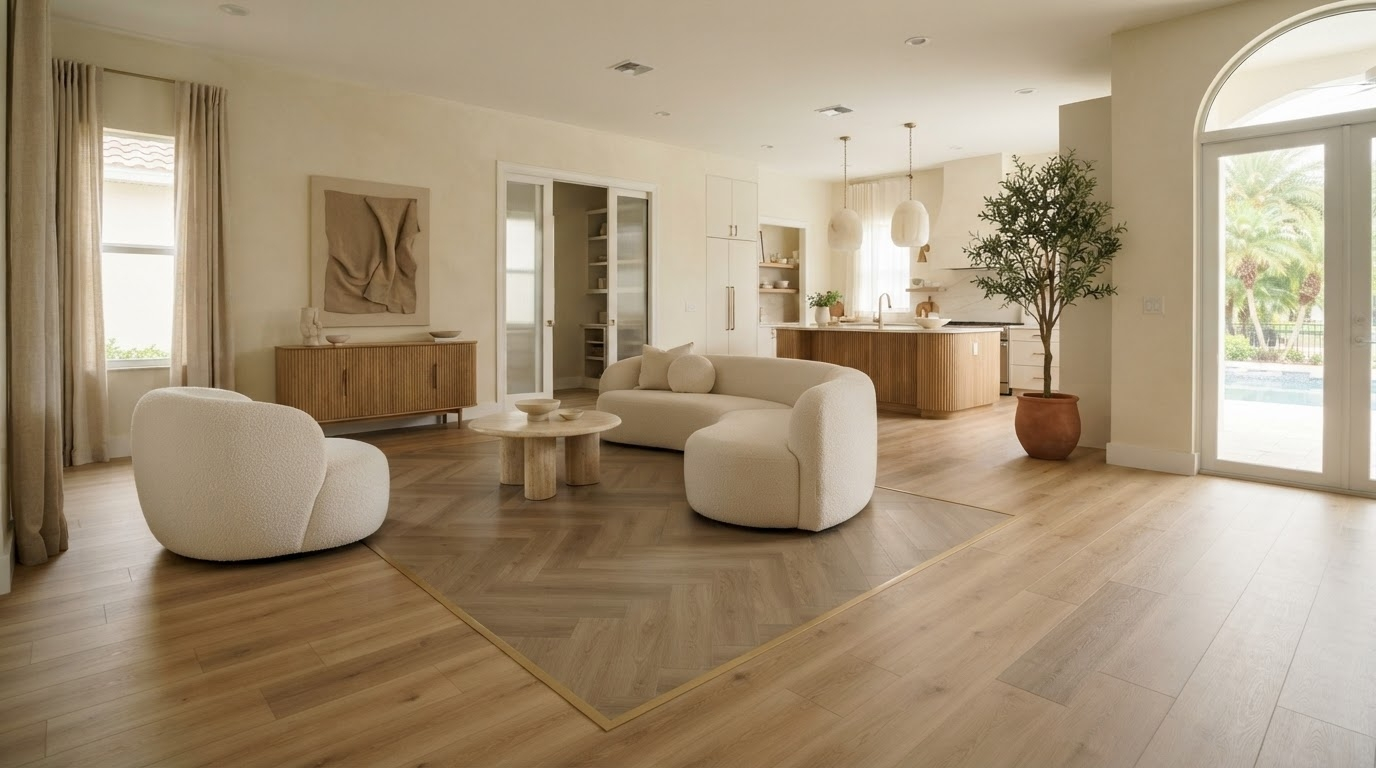
Common LVP Installation Mistakes to Avoid
- Skipping moisture testing — Installing over a concrete slab without testing moisture levels first can trap moisture beneath the floor and cause adhesive failure or plank cupping.
- Poor subfloor preparation — LVP is more forgiving than tile, but a subfloor with significant dips or debris underneath will still telegraph through the planks over time.
- Choosing thin wear layers — A 6 mil wear layer in a high-traffic Tampa household will show visible wear within a year or two; upgrading to 12–20 mil upfront is almost always worth it.
- DIY installation errors — Improper plank stagger, forced click-lock joints, and skipped moisture barriers are the most common DIY mistakes we get called to fix.
- Cheap underlayment — A low-quality underlayment undermines sound dampening and minor subfloor leveling, even when the LVP itself is a premium product.
- Ignoring expansion gaps — LVP still expands and contracts slightly with temperature changes; skipping the required perimeter gap at walls and thresholds can cause the floor to buckle.
How to Choose an LVP Installer in Tampa
LVP looks simple to install, which is exactly why so many Tampa homeowners end up with peaking seams, hollow spots, or gaps within the first year. Use this checklist when vetting an installer.
- Verify a current Florida contractor license and confirm it covers flooring installation.
- Confirm general liability insurance and workers' compensation coverage; ask to see certificates, not just a verbal confirmation.
- Ask about flooring-specific training or certifications (such as those referenced by the Floor Covering Education Foundation).
- Ask how many years the company has installed LVP specifically, not just flooring in general.
- Review a portfolio of completed projects similar to your room type and product grade.
- Read recent reviews and look specifically for mentions of installation quality, communication, and cleanup.
- Ask what warranty covers labor versus what the manufacturer covers on materials, and get it in writing.
- Confirm which installation method they recommend for your subfloor and why (click-lock, glue-down, or loose lay).
- Ask whether moisture testing is included as a standard step on slab installations.
- Get a detailed, itemized written quote that separates material, labor, underlayment, and trim.
ROI & Home Value
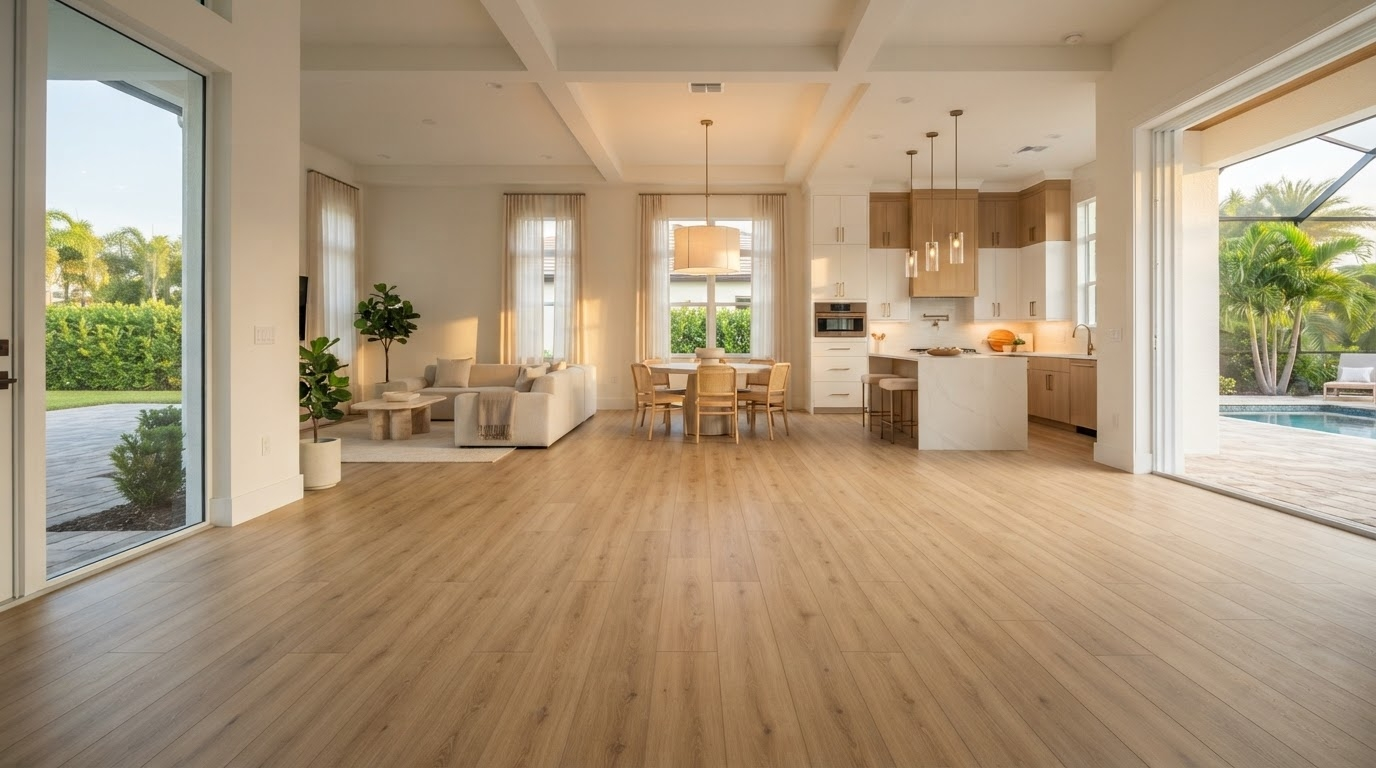
LVP has become one of the flooring upgrades Tampa Bay buyers respond to most positively during a showing. It reads as clean, modern, and low-maintenance, exactly what busy buyers with kids, pets, or rental ambitions are looking for, without the higher price tag of hardwood or tile.
- Buyer appeal — Wide-plank, warm-toned LVP consistently photographs well for listings and reads as a recent renovation, even in an older Tampa Bay home.
- Rental property benefits — Durability and easy plank-level repairs make LVP a favorite among Tampa Bay landlords managing turnover between tenants.
- Maintenance savings — No refinishing, waxing, or resealing over the life of the floor translates into real long-term savings compared to hardwood or natural stone.
- Modern appearance — Wide-format, low-sheen planks give dated homes an instant, cohesive update without the cost of a full flooring tear-out and rebuild.
- Return on investment — Because installed cost sits below hardwood and tile while still delivering a premium look, LVP often delivers a strong value-to-cost ratio for sellers preparing to list.
The bottom line for resale: LVP will not command the same premium as genuine hardwood in an ultra-luxury listing, but for the vast majority of Tampa Bay homes, it delivers the visual upgrade buyers want at a cost that makes financial sense before a sale.
The Bottom Line
LVP has earned its place as the default flooring recommendation for most rooms in a Tampa Bay home, not because it is trendy, but because it genuinely solves the problems Florida homeowners deal with every day: humidity, sand, pets, kids, and the occasional plumbing surprise. The product you choose matters, but so does the installer behind it. Moisture testing, proper subfloor prep, and correct expansion gaps are what separate a floor that looks great for twenty years from one that needs to be redone in three.
At Remodels by Renov8 Plus, LVP installation is often part of a larger kitchen, bathroom, or whole-home renovation we design and build across Tampa Bay. That means the same dedicated project manager who scopes your flooring also coordinates cabinetry, trim, and any plumbing or electrical work nearby, so nothing falls through the cracks between trades.
Get a free, no-obligation LVP flooring estimate from a licensed Tampa Bay design-build team with 10+ years of local experience.
GET YOUR FREE ESTIMATE
(656) 217-1555 | info@renov8plus.com | renov8plus.com