Walk into almost any newly remodeled Tampa Bay home and you will find tile underfoot in the kitchen, the primary bathroom, the laundry room, even the lanai. That is not a coincidence. Premium tile remains the single most requested flooring and finishes option in Tampa remodels because it does something no other surface does as well: it shrugs off Florida's humidity, sand, pets, kids, and pool traffic while still looking sharp a decade later.
But "just install tile" is where a lot of local homeowners get into trouble. The material you choose, the substrate underneath it, the waterproofing behind it, and the crew installing it all determine whether your new floor lasts twenty years or starts cracking and lifting within two rainy seasons. Achieving a flawless, lasting result requires an expert approach to tile installation Tampa homes demand due to our unique coastal climate. Whether you are planning full home renovations, scaling up your cooking space with luxury kitchen remodels, or turning a master suite into a spa with custom bathroom remodels, cutting corners on the foundation always costs more in the long run.
This guide breaks down everything a Tampa homeowner needs to know before starting a tile project: the tile types worth considering, realistic 2026 installation costs by room, how long the process actually takes, the patterns and finishes trending in Tampa Bay homes right now, and the questions that separate a qualified tile contractor from a risky one.
We wrote this as the Renov8 Plus team, the craftsmen who actually lay this tile, not a manufacturer or a marketplace. Every price range, timeline, and recommendation below reflects what we see on real Tampa Bay job sites in Carrollwood bungalows, South Tampa kitchens, Westchase primary baths, and Wesley Chapel new builds alike.
Professional tile installation in Tampa typically runs $9–$28 per square foot installed, depending on tile material, room, and subfloor condition. Ceramic and porcelain floor tile average $9–$18 per square foot installed, while natural stone and large-format porcelain run $18–$28+ per square foot. A standard bathroom floor (40–60 sq ft) typically costs $1,200–$3,200, while a full kitchen tile floor (200–300 sq ft) runs $3,500–$9,500. Most single-room installations take 2–5 days; whole-home tile projects take 2–5 weeks. The biggest cost drivers are tile material, subfloor repair, tile size, and pattern complexity.
Types of Tile for Tampa Homes
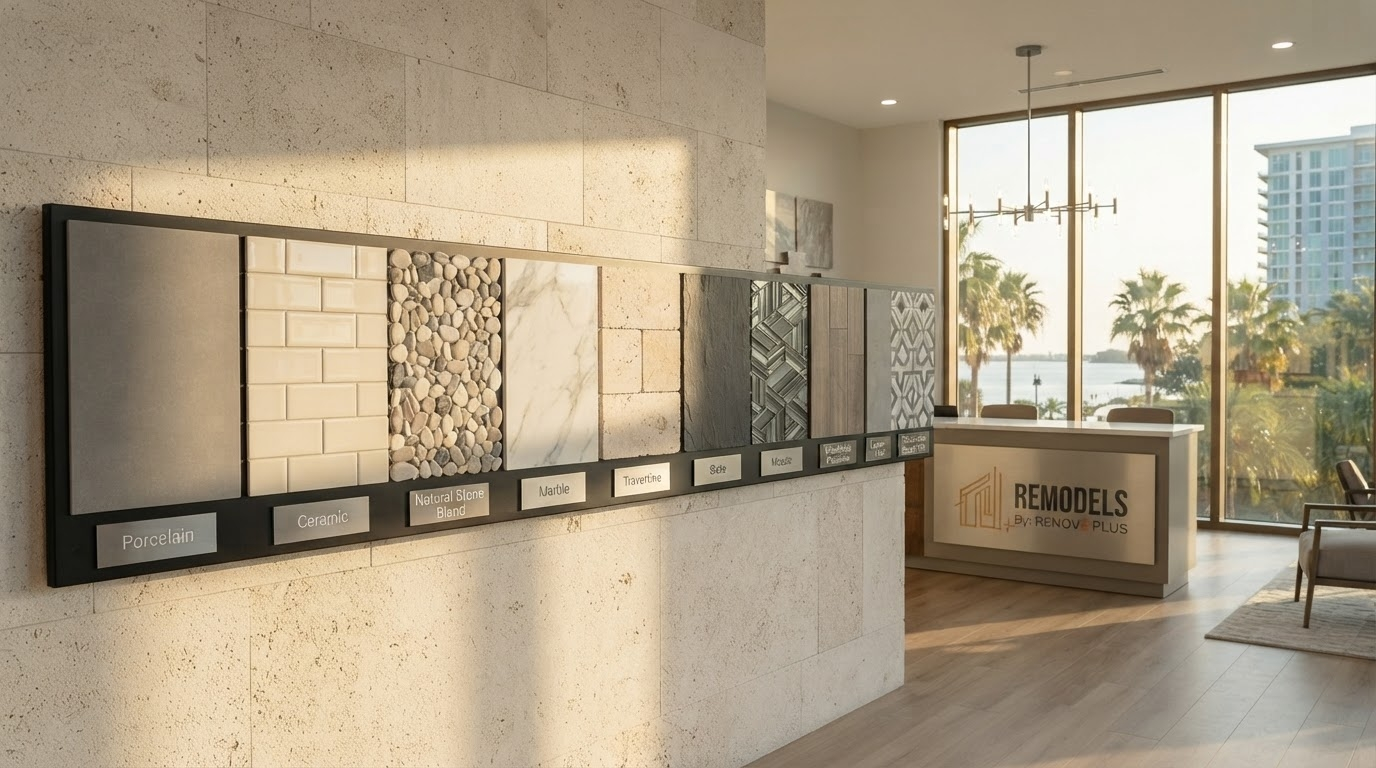
Not every tile performs the same way in a Florida home. A material that is perfect for a low-traffic accent wall in Minnesota can be a slipping hazard or a moisture trap on a Tampa lanai. Here is how the ten most common tile types stack up for Tampa Bay conditions, followed by a closer look at each.
| Tile Type | Price Range (Installed) | Durability | Maintenance | Best For |
|---|---|---|---|---|
| Porcelain | $9–$16/sq ft | Excellent | Low | Floors, showers, high-traffic areas |
| Ceramic | $7–$13/sq ft | Good | Low | Walls, backsplashes, low-traffic floors |
| Natural Stone (blend) | $14–$25/sq ft | Good–Very Good | Medium–High | Accent floors, showers, entries |
| Marble | $18–$30+/sq ft | Good (soft stone) | High | Primary baths, statement walls |
| Travertine | $12–$22/sq ft | Good (porous) | Medium–High | Patios, entries, showers |
| Slate | $12–$20/sq ft | Very Good | Medium | Entryways, mudrooms, outdoor |
| Mosaic | $15–$35/sq ft | Good–Excellent | Medium | Backsplashes, shower floors, accents |
| Wood-Look Porcelain | $10–$18/sq ft | Excellent | Low | Living rooms, kitchens, whole-home |
| Large-Format Tile | $12–$22/sq ft | Excellent | Low | Open floors, showers (fewer grout lines) |
| Decorative Accent | $15–$40+/sq ft | Varies | Medium | Backsplashes, niches, fireplace surrounds |
Porcelain Tile
Porcelain is the workhorse of Tampa Bay tile installation, and for good reason. It is fired at a higher temperature than ceramic, which gives it a water absorption rate below 0.5%, exactly what you want in a climate with a rainy season and year-round humidity. Porcelain resists scratching, staining, and fading, and it performs equally well on floors, shower walls, and even some exterior applications.
Advantages: extremely durable, nearly waterproof, wide style range (including realistic wood- and marble-look finishes), low maintenance. Disadvantages: heavier and harder to cut than ceramic, which means installation labor runs slightly higher. Ideal rooms: kitchens, bathrooms, showers, entryways, and whole-home flooring.
Ceramic Tile
Ceramic tile is the budget-friendly cousin of porcelain. It is easier to cut, lighter to handle, and typically less expensive per square foot, which makes it a smart choice for walls, backsplashes, and lower-traffic areas where its slightly higher porosity is not a concern.
Advantages: lower material and labor cost, huge color and pattern selection, easy to install and repair. Disadvantages: less durable underfoot than porcelain and more prone to chipping in high-impact areas. Ideal rooms: kitchen backsplashes, powder room floors, tub surrounds, and accent walls.
Natural Stone, Marble, Travertine & Slate
Natural stone tile, including marble, travertine, and slate, delivers a look no manufactured tile fully replicates, which is why it shows up so often in Davis Islands and Palma Ceia primary bathrooms. Marble brings dramatic veining but is a soft, porous stone that etches with acidic spills and needs periodic sealing. Travertine has a warm, textured look that works beautifully on covered patios and entries, but it must be sealed regularly in Florida's humidity to prevent staining. Slate is the toughest of the three, with excellent slip resistance that makes it a strong choice for mudrooms and outdoor walkways.
Advantages: one-of-a-kind natural veining and texture, strong resale appeal in luxury homes. Disadvantages: higher material and installation cost, ongoing sealing required, softer stones can scratch or etch. Ideal rooms: primary bathrooms, statement entryways, fireplace surrounds, and covered outdoor living areas.
Mosaic Tile
Mosaic tile, small individual pieces mounted on mesh sheets, is where Tampa homeowners get to have fun. It is the go-to choice for shower floors (the extra grout lines improve slip resistance), kitchen backsplashes, and accent niches. Because mosaics are labor-intensive to lay out and grout, installed cost runs higher per square foot than large-format tile even though material cost per sheet looks affordable.
Wood-Look Porcelain Tile
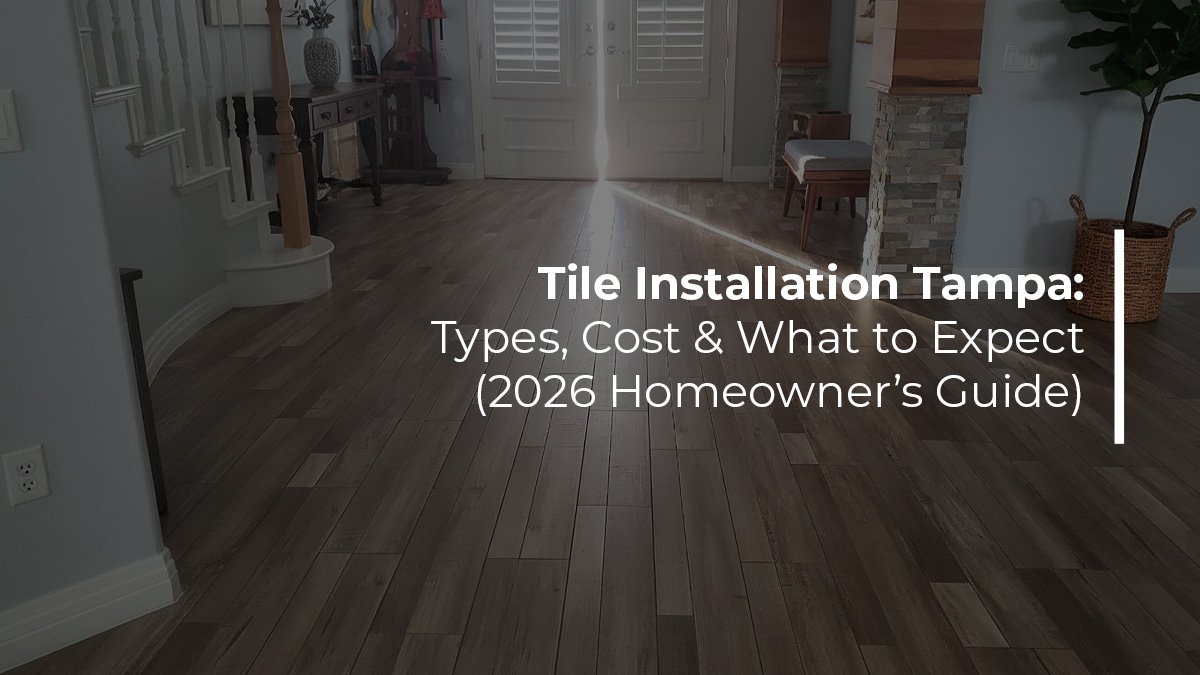
Wood-look porcelain is the single fastest-growing tile category in Tampa Bay remodels right now. It gives homeowners the warmth of hardwood with none of the water risk, which matters enormously in a state where humidity and the occasional plumbing leak can warp real wood floors. Plank-format wood-look porcelain now runs seamlessly from kitchens into living rooms, creating the open, cohesive flooring that buyers expect in a modern Tampa home.
Large-Format Tile
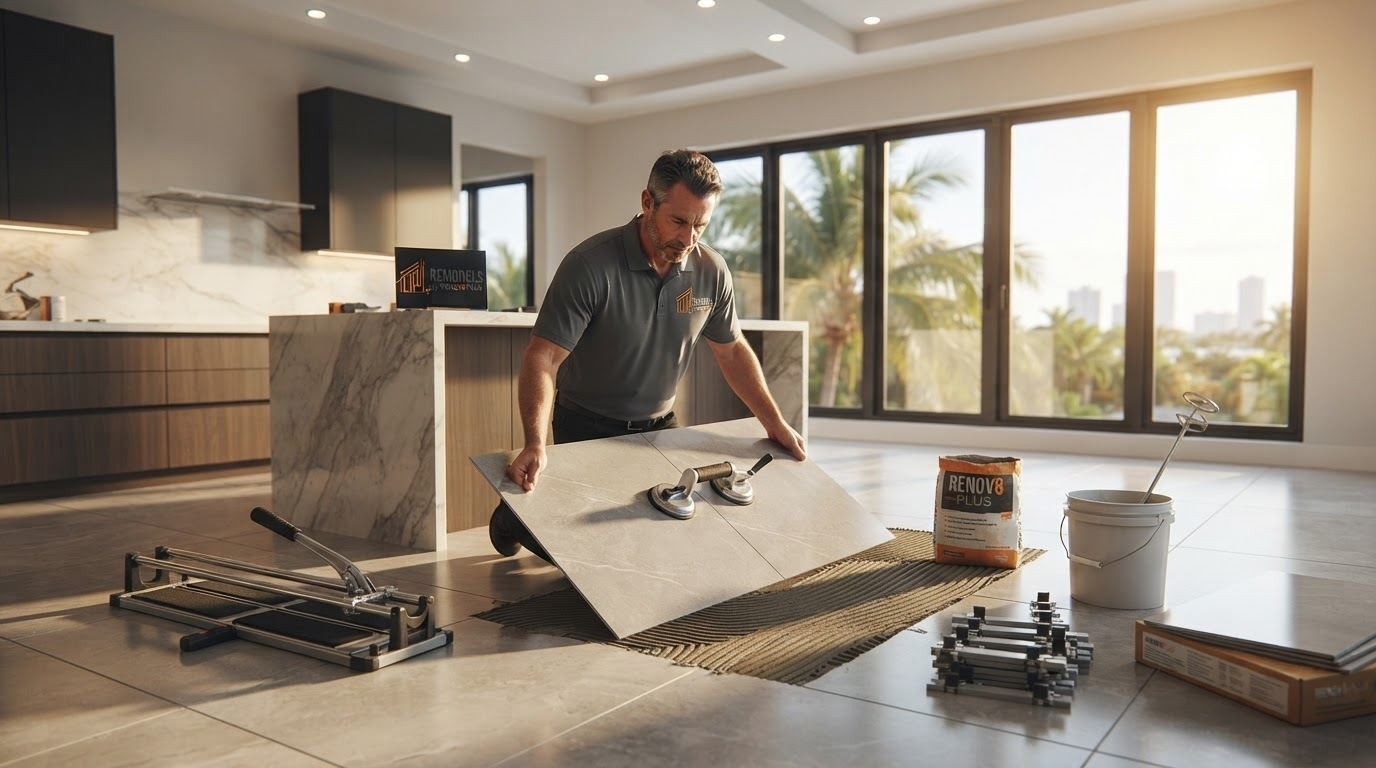
Large-format tile (typically 24"x24" and up, including oversized 24"x48" planks and slabs) has become the default choice for Tampa kitchens and open living areas. Fewer grout lines mean a cleaner, more contemporary look and less grout to clean and reseal over time. The tradeoff is installation: large-format tile requires a dead-flat subfloor and an experienced setter, which is why labor cost runs higher than standard 12"x12" tile.
Decorative & Accent Tile
Decorative and accent tile, including handmade zellige, fluted dimensional tile, patterned cement-look tile, and metallic mosaics, is used sparingly but powerfully: a kitchen backsplash, a fireplace surround, a powder room feature wall, or a shower niche. These tiles carry a premium price per square foot but cover a small area, so they add outsized visual impact without blowing up the overall project budget.
Tile Installation Costs in Tampa
Tile pricing is quoted two different ways: material cost and installed cost, and homeowners often compare the wrong numbers when shopping quotes. Material cost is just the tile itself. Installed cost includes labor, substrate prep, thinset, grout, waterproofing membrane (in wet areas), and cleanup. The figures below use installed cost, since that is the number that actually determines your project budget.
Five factors drive most of the variation you will see between quotes: the tile material you choose, the condition of your existing subfloor, tile size (large-format and mosaic both add labor time for different reasons), pattern complexity (herringbone and chevron take longer to lay than a straight grid), and whether the area requires waterproofing, such as a shower or an exterior threshold.
Cost by Application
Cost by Room: Budget, Mid-Range & Luxury
Use the ranges below to sanity-check a quote against your specific room. "Budget" assumes ceramic or standard porcelain in a simple straight-lay pattern. "Mid-Range" assumes porcelain or large-format tile with moderate pattern work. "Luxury" assumes natural stone, decorative accents, custom patterns, or heated flooring add-ons.
Ask every contractor for a written, itemized quote that separates material allowance from labor. A vague "$8 per square foot" number hides whether subfloor repair, old tile removal, and waterproofing are included, and those line items are exactly where surprise costs show up mid-project.
The Tile Installation Process, Step by Step
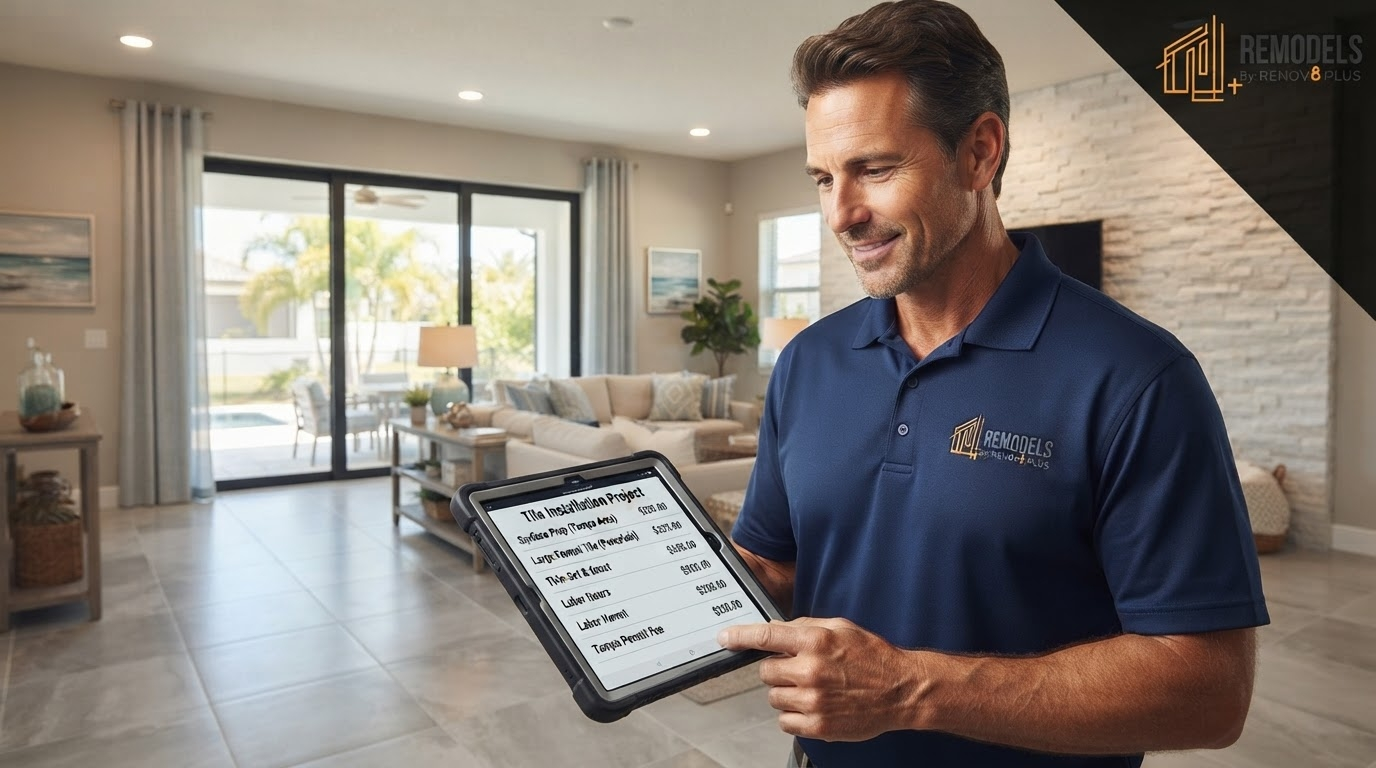
A professional tile installation follows the same sequence whether it is a 40-square-foot powder room or a 1,800-square-foot whole-home floor. Skipping or rushing any of these steps, especially subfloor prep and waterproofing, is the single biggest cause of tile failures we get called to fix in Tampa homes.
Overall Project Timelines
These timelines assume tile is already on-site when installation begins. Custom or imported tile, particularly natural stone, handmade zellige, and specialty accent tile, can add one to four weeks of lead time before installation even starts, so order early if you are working toward a hosting deadline like a holiday or family visit.
Popular Tile Patterns
The pattern you choose affects both the finished look and the labor cost, since intricate layouts require more cuts, more planning, and more setter experience than a basic grid.
Best Tile for Each Room
Why Tile Is Ideal for Tampa's Climate
Florida's heat, humidity, and hurricane season put flooring through more stress than almost anywhere else in the country. Tile consistently outperforms wood, laminate, and carpet in Tampa Bay homes for a handful of climate-specific reasons.
- Humidity resistance — Tampa's average relative humidity sits well above 70% for much of the year. Porcelain and glazed ceramic tile do not absorb moisture from the air the way hardwood does, so they will not swell, cup, or warp.
- Waterproof performance — With a properly waterproofed substrate, tile handles everything from a leaking supply line to a tropical-storm-driven roof leak far better than laminate or engineered wood.
- Mold prevention — Unlike carpet padding or wood subfloor, glazed tile does not provide organic material for mold to feed on, an important consideration given how often Hillsborough and Pinellas County homes deal with humidity-driven mold behind baseboards.
- Slip resistance — Textured and matte-finish porcelain (rated for wet-area use) gives sandy, wet feet from the pool or beach reliable traction, especially at entryways and lanai transitions.
- Cooling benefits — Tile stays noticeably cooler underfoot than carpet or vinyl in a non-air-conditioned garage conversion, sunroom, or covered patio, a real comfort advantage during a Tampa summer.
- Easy cleaning — Sand, pet hair, and everyday Florida grit wipe or sweep off tile in seconds, with none of the trapped-debris issues carpet creates.
- Long lifespan — A properly installed porcelain floor routinely lasts 25–50 years in a Tampa home, multiple hurricane seasons and remodels beyond what carpet or laminate will survive.
On block (CBS) construction, common throughout Tampa Bay, tile also bonds directly and reliably to a concrete slab, which is one reason it remains the default flooring choice in new-construction and slab-on-grade renovations across Hillsborough and Pasco counties. Wet-area installations should always follow current Florida Building Code waterproofing requirements, particularly for shower pans and curbless shower thresholds.
2026 Tile Design Trends in Tampa Bay Homes
Common Tile Installation Mistakes to Avoid
Most tile failures we get called to repair in Tampa homes trace back to one of these seven mistakes, nearly all of them invisible to the homeowner until the tile is already cracking, hollow-sounding, or growing mold at the grout lines.
- Uneven subfloors — Tile set over a subfloor with more than 1/8" of variance across 10 feet will crack at the high and low points within a year or two.
- Incorrect grout selection — Using sanded grout on narrow joints or non-waterproof grout in a shower leads to premature cracking and moisture intrusion.
- Poor layout planning — Starting installation without a dry layout leaves you with sliver cuts at the walls and an off-center pattern that is impossible to fix after the fact.
- DIY installation errors — Skipped waterproofing membranes and inconsistent thinset coverage are the two most common DIY mistakes we see, both invisible until the tile is already failing.
- Inadequate waterproofing — Showers and tub surrounds installed without a code-compliant waterproof membrane are the leading cause of hidden water damage and mold behind Tampa Bay bathroom walls.
- Improper expansion joints — Tile needs designed movement joints, especially over large areas or near transitions; skipping them causes tiles to buckle or "tent" as the slab expands and contracts with temperature.
- Hiring inexperienced installers — Large-format tile, natural stone, and intricate patterns all require setter experience; a crew that only handles basic 12"x12" ceramic will struggle with a 24"x48" porcelain plank floor.
How to Choose a Tile Contractor in Tampa
The tile itself is only half the equation. The installer determines whether that tile lasts twenty-five years or needs to be ripped out in three. Use this checklist when vetting a Tampa tile contractor.
- Verify a current Florida contractor license and confirm it covers tile and flooring work.
- Confirm general liability insurance and workers' compensation coverage, and ask to see certificates, not just a verbal confirmation.
- Ask how many years the company (and the specific crew) has installed tile in Tampa Bay homes.
- Review a portfolio of completed projects similar to yours, not just one polished kitchen among fifty basic jobs.
- Request two or three references you can actually call, ideally for projects completed 1–2 years ago (long enough to reveal how the tile is holding up).
- Ask what warranty covers labor versus what the manufacturer covers on materials, and get it in writing.
- Test their material knowledge; a qualified installer should be able to explain the difference between thinset types, when a membrane is required, and why large-format tile needs a different setting method.
- Ask about their installation method for your specific project: subfloor prep, waterproofing approach, and expansion joint placement.
- Get a detailed, itemized written quote; vague per-square-foot pricing with no breakdown is a red flag.
- Confirm who your point of contact is during the project and how often you will get updates.
Tile vs. Other Flooring Options
Tile is not the right material for every room; a bedroom rarely needs waterproof flooring, but for kitchens, bathrooms, entryways, and Florida rooms, it is worth comparing tile head-to-head against the other flooring types Tampa homeowners consider most often.
LVP is tile's closest competitor in Florida homes; it is genuinely waterproof and less expensive up front. Where tile still wins is longevity, resale perception, and heat resistance (LVP can soften or dent under direct sun exposure near sliding glass doors, which is common in Tampa Bay floor plans). Hardwood and laminate, by contrast, are risky choices for any room with plumbing nearby or direct humidity exposure.
Does Tile Increase Home Value in Tampa?
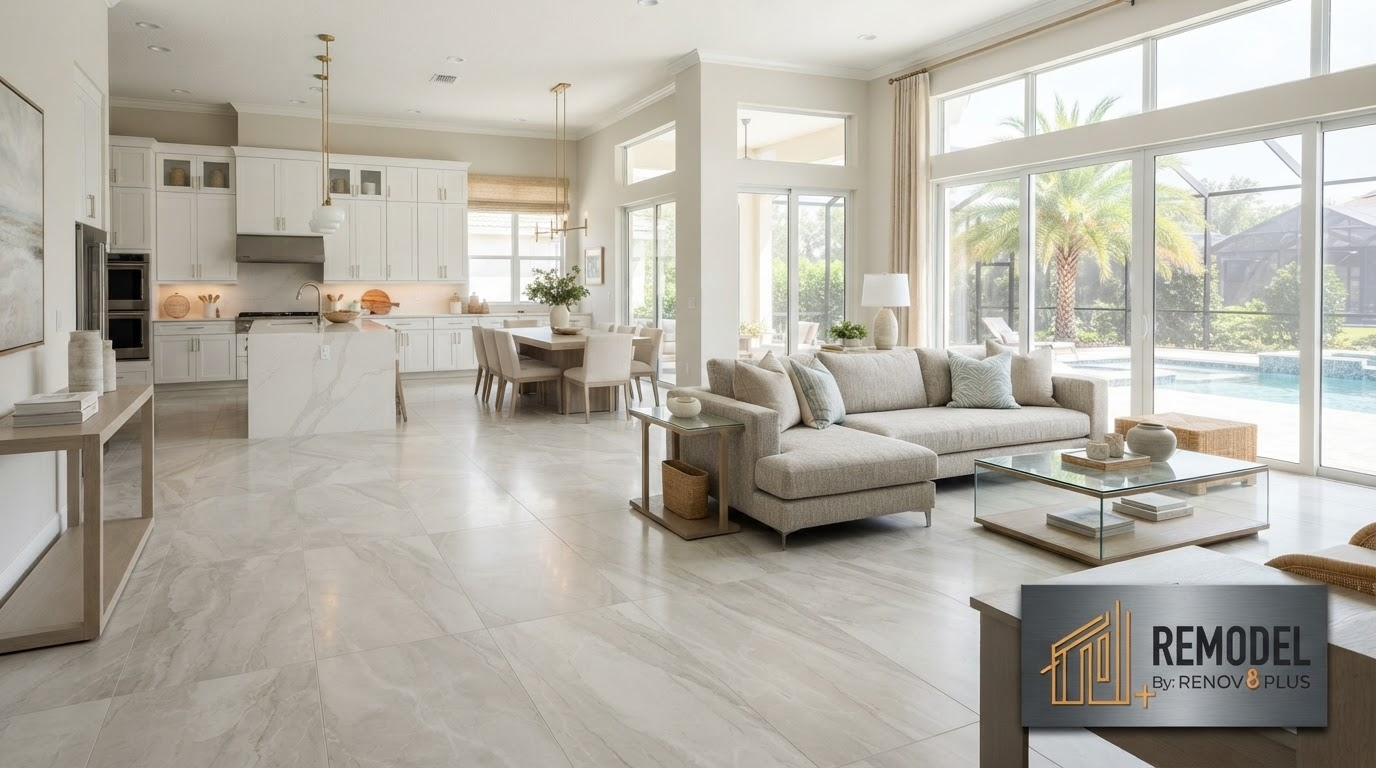
Yes. Updated tile flooring and tile bathroom surfaces are consistently among the upgrades Tampa Bay buyers notice first during a showing, and outdated or damaged tile is a common reason buyers negotiate price down. While exact recoup percentages vary by neighborhood and market conditions, kitchen and bathroom tile upgrades routinely rank among the higher-ROI renovation categories tracked by national remodeling cost-vs-value research, and local agents consistently report that updated tile helps homes in South Tampa, Westchase, and Carrollwood sell faster and closer to asking price than comparable homes with dated flooring.
The Bottom Line
Tile is one of the few flooring decisions in a Tampa Bay home that gets easier to live with over time, not harder, as long as it is installed correctly the first time. The material you choose matters, but the subfloor prep, waterproofing, and installer experience behind that tile matter just as much. Get an itemized quote, ask the questions in our contractor checklist above, and choose a team that treats your Tampa home the way they would treat their own.
At Remodels by Renov8 Plus, tile installation is rarely a stand-alone job; it is part of the kitchens, bathrooms, and full-home renovations we design and build across Tampa Bay every day. That means the same dedicated project manager who scopes your tile also coordinates your cabinets, plumbing, and permitting, so nothing falls through the cracks between trades.
Get a free, no-obligation tile installation estimate from a licensed Tampa Bay design-build team with 10+ years of local experience.
GET YOUR FREE ESTIMATE
(656) 232-0999 | info@renov8plus.com | renov8plus.com