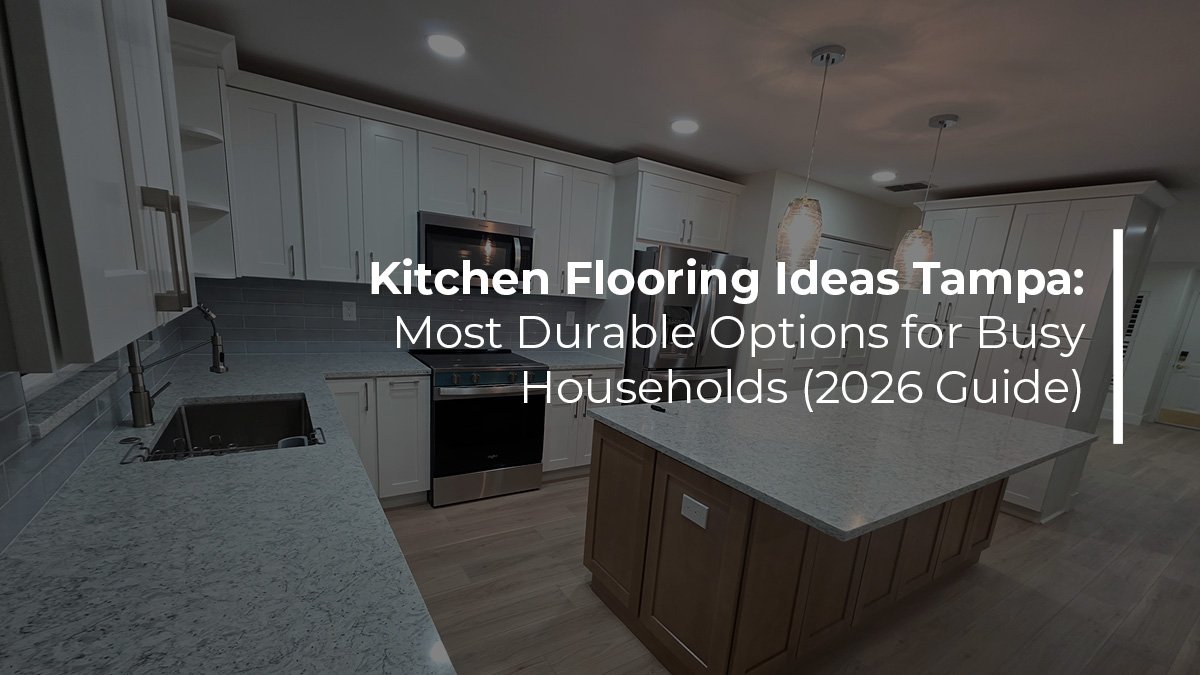
If you've ever mopped up a puddle by the sink for the third time this week, or watched grout lines turn gray no matter how hard you scrub, you already know: not all kitchen flooring is built for real life. In Tampa Bay, your floors face a tougher job than almost anywhere else in the country: humidity that never fully lets up, sandy feet from the beach, muddy paws after a summer storm, and the daily wear of a busy household that actually lives in its kitchen.
Choosing kitchen flooring ideas Tampa homeowners can count on isn't just about picking a color you like at the showroom. It's about matching the material to Florida's climate, your family's lifestyle, and your long-term budget so you're not redoing the job again in five years.
This guide breaks down the most durable kitchen flooring options for busy Tampa households in 2026: what they cost installed, how they hold up to humidity and heavy traffic, and which ones our project managers actually recommend after 10+ years of Tampa Bay remodels.
For most Tampa Bay families, waterproof luxury vinyl plank (LVP) is the best all-around kitchen flooring; it resists humidity, scratches, and spills, costs $7–$12 per square foot installed, and holds up well to kids and pets. Homeowners who want a more premium, cooler-underfoot option often choose wood-look porcelain tile, which offers superior water resistance for a similar price range.
Best Kitchen Flooring Options for Tampa Homes
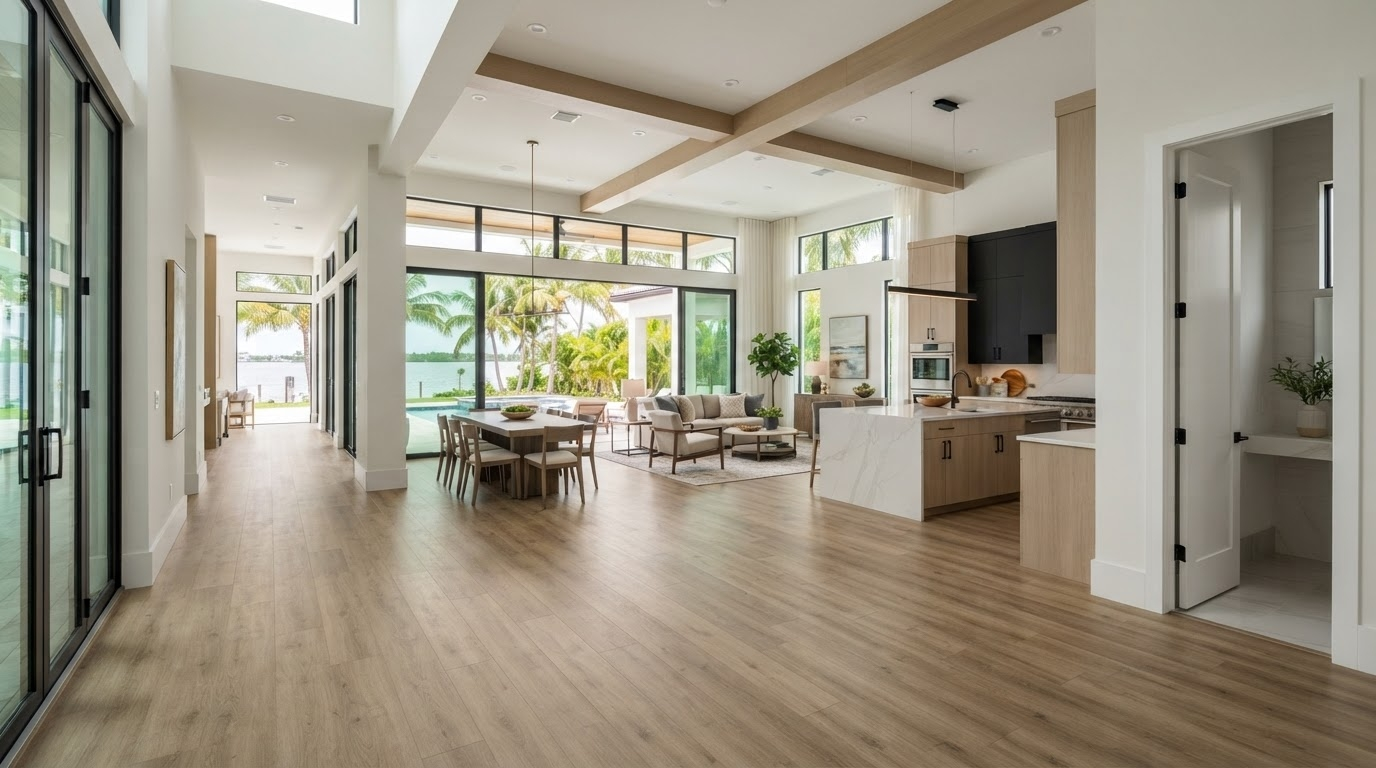
Here's an honest, contractor-level breakdown of the six flooring materials we install most often in Tampa Bay kitchens, including where each one shines and where it falls short.
1. Luxury Vinyl Plank (LVP)
LVP is the most popular kitchen flooring in Tampa right now, and for good reason. Modern waterproof LVP is built from multiple layers, including a rigid core and a wear layer that resists scratches, dents, and standing water.
- Benefits — 100% waterproof, scratch-resistant, warm underfoot, budget-friendly, realistic wood and stone visuals, DIY-adjacent but best installed professionally for a lasting seal.
- Drawbacks — Lower-end products can dent under heavy furniture; quality varies significantly by brand and wear-layer thickness.
- Lifespan — 15–25 years with proper installation.
- Cost — $7–$12 per sq. ft. installed.
- Best for — Families with kids and pets, budget-conscious remodels, and anyone prioritizing waterproofing.
2. Porcelain Tile
Porcelain is denser and less porous than ceramic, making it one of the most water-resistant flooring materials available, a major advantage in Tampa's humidity. Wood-look porcelain planks are especially popular for kitchens that want a hardwood aesthetic without the moisture risk.
- Benefits — Extremely durable, highly water- and stain-resistant, low maintenance, wide range of styles including wood-look and stone-look finishes.
- Drawbacks — Hard and cold underfoot, grout lines require occasional resealing, higher installation cost.
- Lifespan — 25+ years.
- Cost — $9–$16 per sq. ft. installed.
- Best for — Waterfront homes, luxury remodels, and open-concept kitchens with heavy foot traffic.
3. Ceramic Tile
Ceramic tile is a budget-friendlier cousin of porcelain, still water-resistant and durable, though slightly more porous. It remains a solid, cost-effective choice for Tampa kitchens with moderate traffic.
- Benefits — Good water resistance, wide style range, more affordable than porcelain, easy to spot-repair.
- Drawbacks — More prone to chipping and cracking than porcelain; grout maintenance required.
- Lifespan — 15–20 years.
- Cost — $6–$11 per sq. ft. installed.
- Best for — Budget-conscious kitchen remodels and rental or investment properties.
4. Engineered Hardwood
Engineered hardwood brings genuine warmth and resale appeal, with a real wood veneer bonded over a moisture-resistant plywood core. It's more humidity-tolerant than solid hardwood, but still not fully waterproof, a real consideration in a Florida kitchen.
- Benefits — Authentic wood look and feel, strong resale appeal, can be lightly refinished, more stable than solid hardwood in humidity.
- Drawbacks — Not fully waterproof, can warp with standing water, higher cost, requires more careful maintenance.
- Lifespan — 20–30 years with care.
- Cost — $10–$18 per sq. ft. installed.
- Best for — Open-concept homes blending kitchen and living areas, and luxury remodels prioritizing resale value.
5. Waterproof Laminate
Newer waterproof laminate products have closed much of the durability gap with LVP, using a sealed core that resists spills better than traditional laminate ever could, a good middle-ground option for busy households on a tighter budget.
- Benefits — Affordable, scratch-resistant surface layer, easy installation, realistic wood-look designs.
- Drawbacks — Even "waterproof" versions can be vulnerable at seams over time; shorter lifespan than LVP or tile.
- Lifespan — 10–20 years.
- Cost — $5–$10 per sq. ft. installed.
- Best for — First-time remodelers on a tight budget who still want a wood-look floor.
6. Natural Stone
Travertine, slate, and marble bring an unmatched luxury look to a Tampa Bay kitchen, but they require sealing and more careful maintenance to stay resistant to Florida's humidity and acidic spills.
- Benefits — One-of-a-kind natural beauty, adds significant luxury home value, extremely durable when properly sealed.
- Drawbacks — Requires regular resealing, porous without sealant, highest cost, cold and hard underfoot.
- Lifespan — 25+ years with maintenance.
- Cost — $15–$30+ per sq. ft. installed.
- Best for — Luxury homes in Davis Islands, Culbreath Isles, and Palma Ceia where budget is secondary to statement design.
Flooring Comparison at a Glance
| Flooring | Water Resistance | Durability | Lifespan | Cost/sq ft |
|---|---|---|---|---|
| Luxury Vinyl Plank | Excellent (100% waterproof) | High | 15–25 yrs | $7–$12 |
| Porcelain Tile | Excellent | Very High | 25+ yrs | $9–$16 |
| Ceramic Tile | Good | Moderate–High | 15–20 yrs | $6–$11 |
| Engineered Hardwood | Moderate | High | 20–30 yrs | $10–$18 |
| Waterproof Laminate | Good | Moderate | 10–20 yrs | $5–$10 |
| Natural Stone | Good (when sealed) | Very High | 25+ yrs | $15–$30+ |
Cost Comparison: Installed Pricing in Tampa Bay
Installed cost includes both material and labor. Actual pricing depends on kitchen square footage, subfloor condition, and material grade, but here's what Tampa Bay homeowners can expect to budget for a typical 200 sq. ft. kitchen.
| Flooring Type | Material Cost/sf | Labor Cost/sf | Total Installed/sf | Est. 200 sf Total |
|---|---|---|---|---|
| Luxury Vinyl Plank | $3–$6 | $4–$6 | $7–$12 | $1,400–$2,400 |
| Porcelain Tile | $4–$8 | $5–$8 | $9–$16 | $1,800–$3,200 |
| Ceramic Tile | $2–$5 | $4–$6 | $6–$11 | $1,200–$2,200 |
| Engineered Hardwood | $5–$9 | $5–$9 | $10–$18 | $2,000–$3,600 |
| Waterproof Laminate | $2–$4 | $3–$6 | $5–$10 | $1,000–$2,000 |
| Natural Stone | $7–$15 | $8–$15 | $15–$30+ | $3,000–$6,000+ |
Which Flooring Is Best for Your Household?
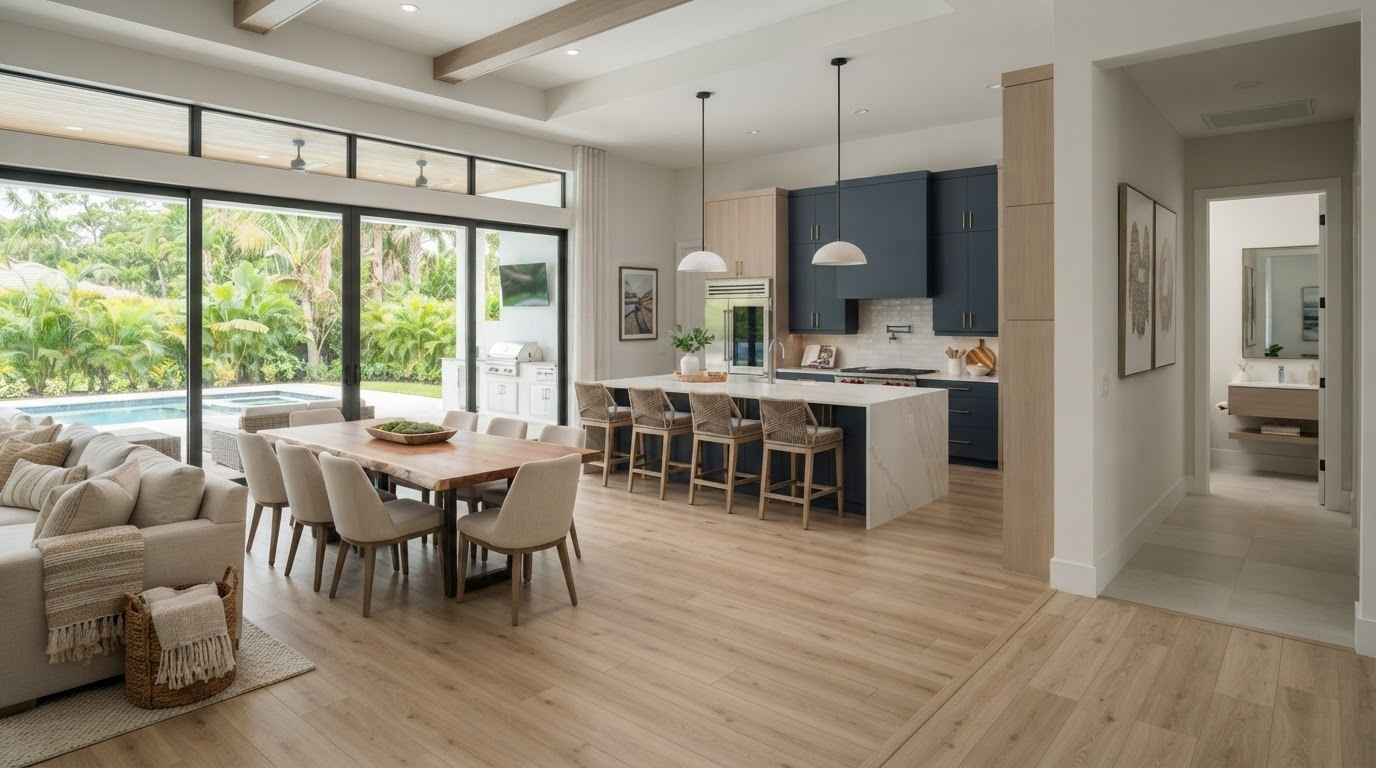
- Families with young children — Waterproof LVP: soft underfoot, forgiving of spills and dropped toys, easy to clean.
- Pet owners — LVP or porcelain tile: both resist scratches from claws and are easy to sanitize after accidents.
- Luxury homes — Natural stone or large-format wood-look porcelain tile for a statement look with strong resale appeal.
- Rental properties — Ceramic tile or budget LVP: durable, low-maintenance, and cost-effective between tenants.
- Open-concept kitchens — Engineered hardwood or wide-plank LVP for a seamless visual flow into adjoining living spaces.
- Small kitchens — Large-format tile or light wood-look LVP to visually expand the space.
- High-traffic homes — Porcelain tile for maximum long-term durability under constant foot traffic.
- Waterfront homes — Porcelain tile or waterproof LVP: both stand up best to humidity, salt air, and moisture intrusion.
Florida Climate Considerations
Tampa's subtropical climate puts real demands on kitchen flooring that homeowners in drier states never have to think about.
- Humidity — Year-round humidity above 60% can cause solid hardwood to expand, contract, and warp; waterproof materials avoid this risk entirely.
- Waterproof performance — Sink leaks, ice maker lines, and dishwasher overflow are common; fully waterproof flooring prevents costly subfloor damage.
- Mold prevention — Non-porous materials like LVP and sealed porcelain resist the mold growth that Florida's moisture can encourage in porous flooring.
- Flood resistance — Homes in flood-prone zones benefit from waterproof core flooring that can survive brief water exposure without replacement.
- Heat resistance — Tile and stone stay cooler underfoot during Tampa summers, while LVP offers better warmth in air-conditioned homes.
- Easy maintenance — Sandy, muddy feet from beach days and yard work call for flooring that wipes clean without special treatments.
- Long-term durability — Materials rated for moisture resistance simply last longer in a Gulf Coast climate than those rated for drier regions.
Kitchen Flooring Design Trends for 2026
Flooring Installation Timeline
A typical Tampa Bay kitchen flooring project follows this sequence.
| Flooring Type | Typical Installation Time |
|---|---|
| Luxury Vinyl Plank | 1–2 days |
| Ceramic / Porcelain Tile | 2–4 days |
| Engineered Hardwood | 2–3 days |
| Waterproof Laminate | 1–2 days |
| Natural Stone | 3–5 days |
Common Kitchen Flooring Mistakes to Avoid
- Choosing flooring based on price alone, without factoring in long-term durability
- Ignoring moisture resistance in a humid Florida climate
- Attempting DIY installation on a material that requires professional-grade subfloor prep
- Skipping proper subfloor leveling and moisture barriers before installation
- Selecting a delicate or high-maintenance material for a high-traffic, busy household kitchen
Best Flooring for Home Value
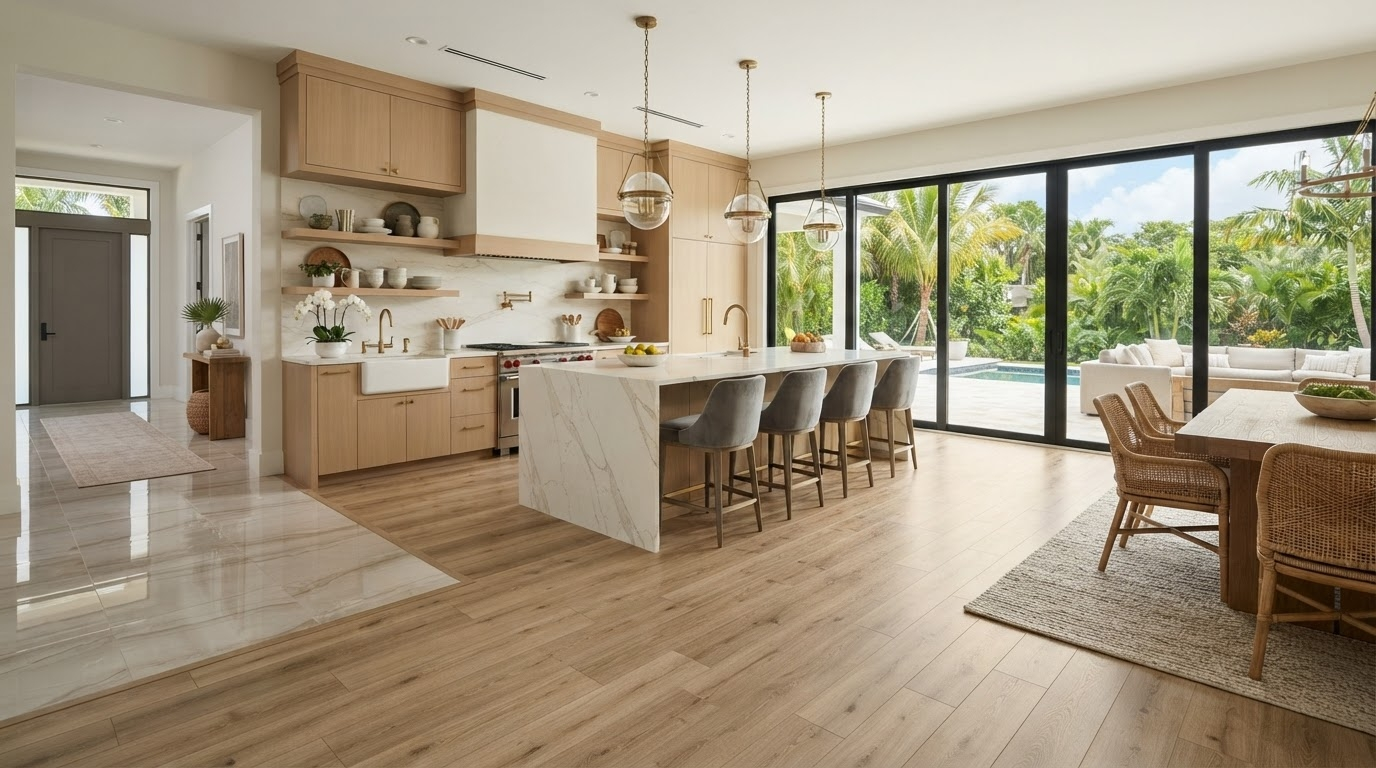
When it comes to resale, wood-look porcelain tile and premium waterproof LVP consistently deliver the strongest combination of buyer appeal and durability for Tampa Bay homes. According to Remodeling Magazine's Cost vs. Value data, flooring upgrades in the kitchen are among the more reliable ways to recoup renovation cost at resale, especially when paired with a broader kitchen remodel.
Engineered hardwood offers the highest emotional buyer appeal in open-concept homes, but for pure durability, lowest maintenance, and long-term value, waterproof LVP and porcelain tile remain our top contractor recommendations for busy Tampa Bay households.
Conclusion
The best kitchen flooring ideas Tampa homeowners can invest in all share three traits: waterproof performance, low maintenance, and durability built for Florida's climate and a busy household's daily wear. Waterproof LVP remains our top overall recommendation for most families, while wood-look porcelain tile is the go-to choice for homeowners wanting maximum longevity and resale appeal.
Whatever material you choose, proper subfloor preparation and professional installation make the difference between flooring that lasts 20+ years and flooring that needs replacing in five.
Ready to choose the right kitchen flooring for your Tampa Bay home? Remodels by Renov8 Plus has helped Tampa, South Tampa, Carrollwood, Brandon, Riverview, Wesley Chapel, Lutz, Odessa, Clearwater, and St. Petersburg homeowners select and install durable, waterproof flooring for over 10 years. Schedule a free consultation, compare flooring samples in person, and get a transparent, on-budget quote from a dedicated project manager start to finish.
(656) 232-0999 | info@renov8plus.com | renov8plus.com
Licensed Florida General Contractor — CGC #1537706