
Tampa Bay's housing market has homeowners thinking twice about moving. With mortgage rates keeping many families in place and home values climbing across Carrollwood, Westchase, South Tampa, and Brandon, more homeowners are choosing to renovate instead of relocate. But once you've decided to invest in your current home, a bigger question follows: do you tackle everything at once with a full-home renovation, or spread the work out room by room? For the complete overview, see our Home Remodeling Tampa: Complete Guide.
Both approaches can deliver a home you love, but they come with very different price tags, timelines, and levels of disruption to daily life. A whole-home renovation offers design consistency and can be more cost-efficient in the long run, while phased remodeling lets you spread out the investment and keep living comfortably between projects.
This guide breaks down the real costs, realistic timelines, and lifestyle trade-offs of each approach for Tampa Bay homeowners, so you can choose the strategy that fits your budget, your home, and your family.
Full-home renovation is usually the better choice for homeowners with a larger budget, an older home needing structural updates, or plans for major layout changes. Room-by-room remodeling works best for homeowners with a limited budget, a home they're currently living in, or a plan to improve their house gradually over several years.
What Is a Full-Home Renovation?
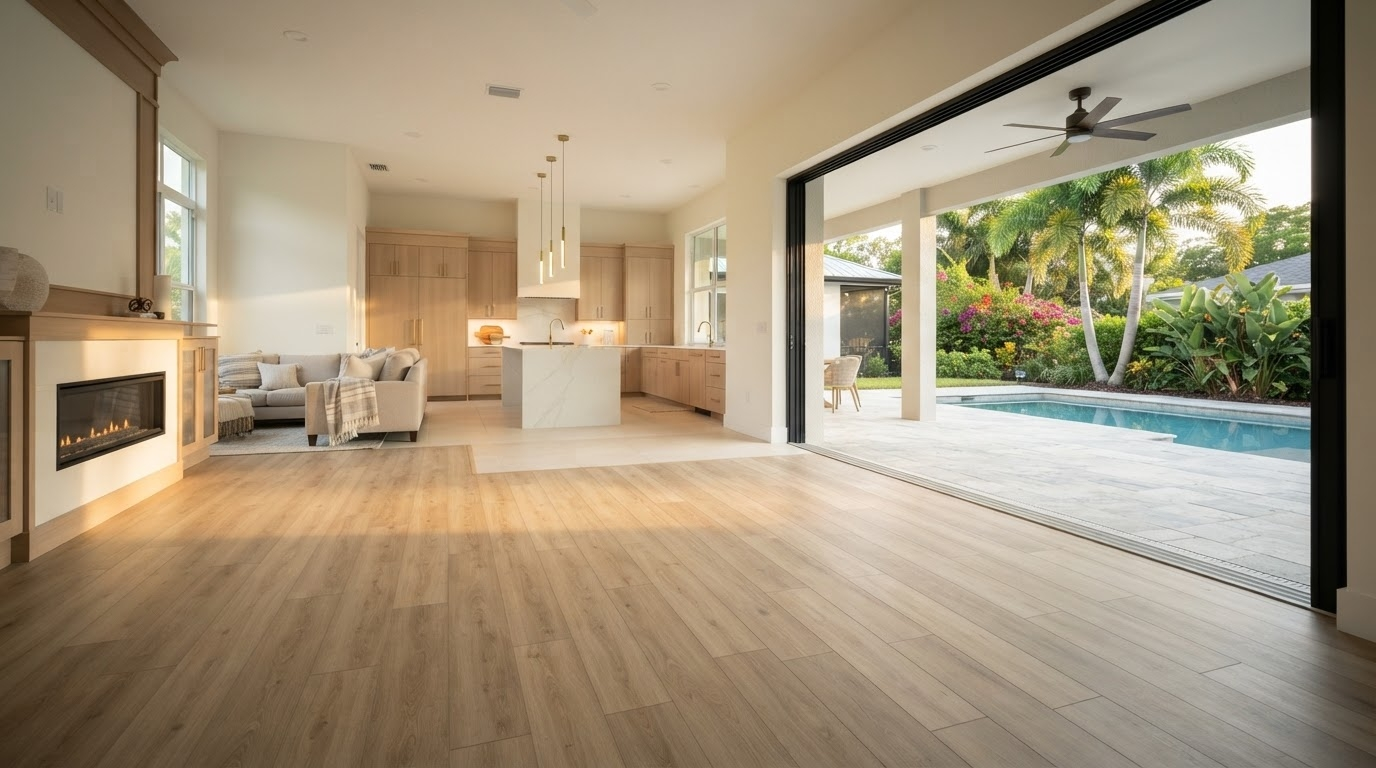
A full-home renovation means redesigning and rebuilding most or all of your home's interior in a single, coordinated project. Instead of tackling the kitchen this year and the bathroom next year, one design and construction team manages the entire scope from start to finish.
Scope of Work Typically Includes
- Kitchen and bathroom remodels
- Flooring throughout the home
- Interior layout changes and wall removals
- Electrical, plumbing, and HVAC updates
- Paint, trim, and lighting
- Additions or structural work, when needed
Best Candidates
- Homeowners with an older home (built before 2000) needing systems updates
- Buyers of a fixer-upper who want everything move-in ready
- Families planning to stay long-term who want a cohesive design
- Homeowners with a larger, dedicated renovation budget
Advantages
- One design vision across every room
- Fewer total contractor mobilizations, which can lower labor costs
- Bulk material ordering discounts
- One coordinated permit process instead of several
- Faster overall completion than tackling rooms one at a time over years
Challenges
- Higher upfront cost
- Larger disruption to daily life during construction
- May require temporary relocation
- Requires more upfront planning and decision-making
What Is Room-by-Room Remodeling?
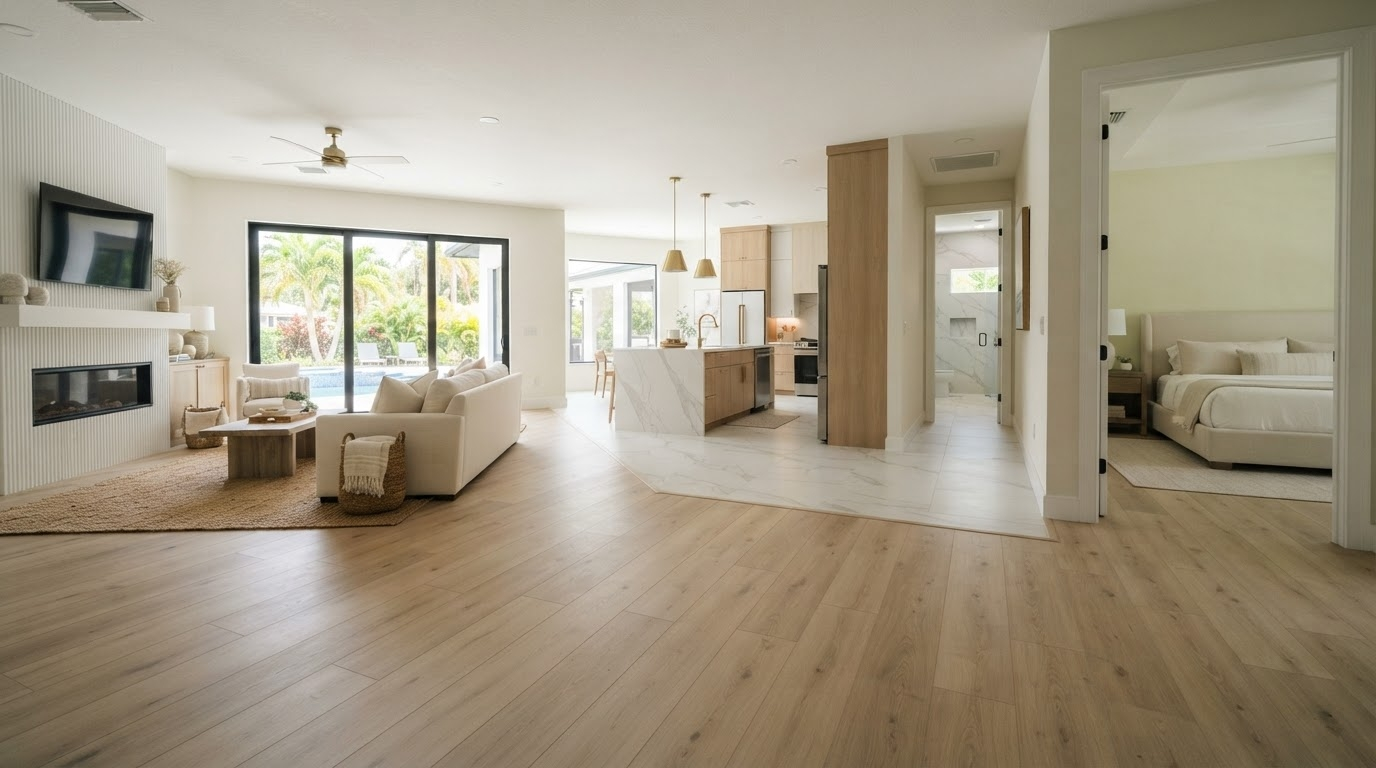
Room-by-room remodeling, also called phased remodeling, breaks a larger renovation vision into smaller, separately funded projects completed over months or years. Most Tampa homeowners start with the kitchen or primary bathroom, then move to flooring, secondary bathrooms, or additional rooms as budget allows.
Typical Project Order
- Kitchen (highest-impact, highest-ROI room)
- Primary bathroom
- Flooring throughout main living areas
- Secondary bathrooms
- Additional living spaces or outdoor areas
Advantages
- Lower upfront cost per project
- Easier to finance with cash or smaller loans
- You keep living in most of your home during each phase
- Flexibility to adjust design and budget between projects
Challenges
- Design can feel disjointed if phases aren't planned together
- Repeated contractor mobilization can raise total labor cost
- Materials may be discontinued between phases, complicating matching
- Multiple permit applications and inspections
- Total project cost is often higher than a bundled renovation
Side-by-Side Comparison
Here's how full-home renovation and room-by-room remodeling stack up across the factors that matter most to Tampa Bay homeowners.
| Factor | Full-Home Renovation | Room-by-Room Remodeling |
|---|---|---|
| Overall Cost | Higher upfront, lower per sq. ft. | Lower upfront, higher over time |
| Timeline | 8–20 weeks total | 2–8 weeks per room, over months/years |
| Convenience | One project, one timeline | Repeated projects and planning |
| Living Disruption | High for a defined period | Lower per project, but recurring |
| Financing | Often one loan or cash-out refinance | Pay per project as budget allows |
| Design Consistency | Excellent, one cohesive vision | Requires a master plan to stay consistent |
| Resale Value | Strongest, move-in ready appeal | Builds value gradually |
| Permit Process | One coordinated permit package | Separate permits per phase |
| Material Ordering | Bulk discounts, consistent stock | Repeat orders, risk of discontinued styles |
| Contractor Coordination | Single team manages everything | May involve different crews over time |
| Long-Term Savings | Generally lower total cost | Generally higher total cost over years |
| Flexibility | Less flexible once started | Highly flexible, pause anytime |
Cost Comparison
Tampa remodeling costs vary based on square footage, finish level, and structural scope. The figures below reflect typical 2026 pricing across budget, mid-range, and luxury tiers.
Whole-home renovations in Tampa Bay typically run $60 to $150+ per square foot depending on finish level and how much structural work is involved. Room-by-room projects concentrate spending into one space at a time, which feels more affordable upfront but usually adds up to a higher total investment across the full home.
Timeline Comparison
Full-Home Renovation Timeline
Room-by-Room Remodeling Timeline
Which Option Saves More Money?
On paper, room-by-room remodeling looks more affordable because each project has a smaller price tag. But across the full scope of a home, phased remodeling is usually more expensive in total. Every new project means remobilizing a crew, reordering materials in small quantities, and paying separate permit fees.
Prices also rise with inflation between phases; a kitchen that costs $30,000 today may cost several thousand dollars more in three years. Bundling projects into one full-home renovation lets a design-build contractor negotiate better material pricing, schedule labor efficiently, and avoid the repeated setup costs that add up with a phased approach.
Living in Your Home During Remodeling
Full-Home Renovation
A full-home renovation typically requires temporary relocation for at least part of the project, especially during kitchen and bathroom demolition when water and cooking access are limited. Some Tampa families stay with relatives, rent a short-term unit, or plan around the most disruptive weeks of construction.
Room-by-Room Remodeling
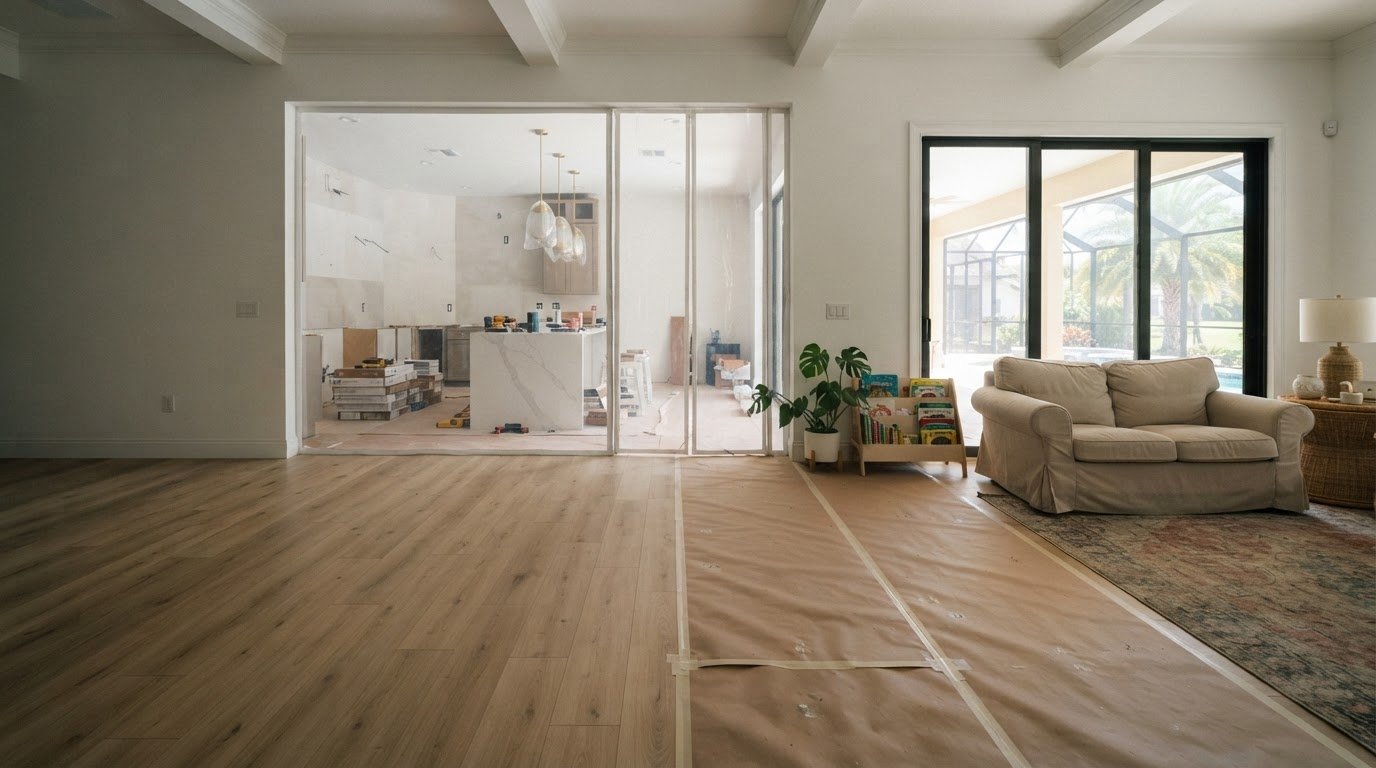
Most homeowners stay in their home throughout a phased remodel, since only one room is affected at a time. Dust containment and daily cleanup keep the rest of the house livable. Pets may need to stay in an unaffected part of the home, and anyone working from home should plan around the noisiest phases, like demolition and tile work.
- Temporary relocation — More likely with full-home projects, rare with single-room phases.
- Dust and noise — Contained to one area at a time with phased remodeling.
- Utility interruptions — Shorter and more predictable per phase.
- Family routines — Easier to maintain during single-room projects.
- Pets — Can usually stay in unaffected areas during a phased approach.
- Work-from-home professionals — Should plan around demolition and tile-setting days regardless of approach.
Best Choice for Different Homeowners
Tampa-Specific Remodeling Considerations
- Hurricane season planning — Schedule exterior work and additions outside peak hurricane months (June through November) when possible.
- High humidity — Choose moisture-resistant materials, such as LVP, tile, and moisture-rated drywall, especially in bathrooms and kitchens.
- Older block homes — Many Tampa Bay homes use concrete block (CBS) construction, which affects how walls can be moved and where plumbing and electrical runs are placed.
- Flood zones — Homes in flood zones may need additional permitting or elevation considerations for structural changes.
- Florida permits — Hillsborough and Pinellas County permitting timelines vary; full-home projects benefit from a single, coordinated permit package.
- Energy-efficient upgrades — Florida's climate makes insulation, impact windows, and efficient HVAC especially valuable additions during any renovation.
Common Mistakes to Avoid
- Remodeling without a master plan, even if doing the work in phases
- Underestimating the total budget for a full-scope renovation
- Hiring multiple contractors without coordinating design and timeline
- Choosing finishes room by room without a cohesive design direction
- Ignoring permit requirements to save time or money
- Delaying necessary structural, electrical, or plumbing repairs until they become emergencies
How to Decide Which Approach Is Right for You
Work through this checklist with your household before committing to either approach.
- Budget — Can you fund the full project now, or does it need to be spread out?
- Timeline — Do you need everything done before a specific event or move-in date?
- Home condition — Does your home have underlying systems issues that affect every room?
- Family size — Can your household tolerate a full-home disruption, or is a phased approach more realistic?
- Future plans — Are you staying 10+ years, or preparing to sell in the next few years?
- Financing — Will you use cash, a renovation loan, or pay per phase?
- Resale goals — Do you need maximum value now, or are you improving for your own enjoyment over time?
Conclusion
There's no universally right answer between a full-home renovation and room-by-room remodeling, only the right answer for your budget, your home, and your timeline. If you have the funds and want a cohesive, move-in-ready result, a full-home renovation typically saves money and hassle in the long run. If you need to spread out the investment or are living in the home you're improving, room-by-room remodeling lets you make steady progress without overwhelming your budget or your daily life.
Either way, the most important step is planning with a Tampa Bay design-build team that can guide you through the decision and execute it flawlessly.
Remodels by Renov8 Plus has helped Tampa Bay homeowners plan and complete both full-home renovations and phased, room-by-room remodels for over 10 years. Schedule your free consultation and we'll walk your home, review your goals, and recommend the strategy that makes the most sense for you, with zero pressure.
GET YOUR FREE ESTIMATE
(656) 232-0999 | info@renov8plus.com | Licensed & Insured CGC #1537706